Story
Begin the Morning by Saying
Begin the morning by saying to thyself, I shall meet with the busybody, the ungrateful, arrogant, deceitful, envious, unsocial.
George Long's 1862 translation of Meditations 2.1. The sentence is a private note, not a speech. Long's text ends Book II with the words "This in Carnuntum."
No post link has been added yet. When a cut is published, it will be listed here. The accounts are Instagram, X, YouTube, Pinterest.
The story
Marcus Aurelius wrote Book II of the notes later called Meditations to himself. George Long’s 1862 translation opens it with a morning rehearsal: he will meet the busybody, the ungrateful, the arrogant, the deceitful, the envious, the unsocial. He does not stop at the list. Those people, he says, act from ignorance of good and evil. The wrongdoer is still kin, sharing reason, and so is not someone to hate. People are made to work together, like feet, hands, eyelids, and the rows of teeth. To be vexed and turn away is to act against one another, and that is contrary to nature.
The book does not stay on other people’s manners. A few lines later he tells himself to throw away the books, to remember that he is an old man, and to stop being pulled like a puppet. Long’s translation then ends the whole book with four words: “This in Carnuntum.”
Long’s note identifies Carnuntum as a town of Pannonia on the south side of the Danube, about thirty miles east of Vindobona, modern Vienna. He cites Orosius and Eutropius for a stay of three years there during the wars with the Marcomanni. The place-note is part of the text he prints. It is not a date for section 2.1 down to a morning.
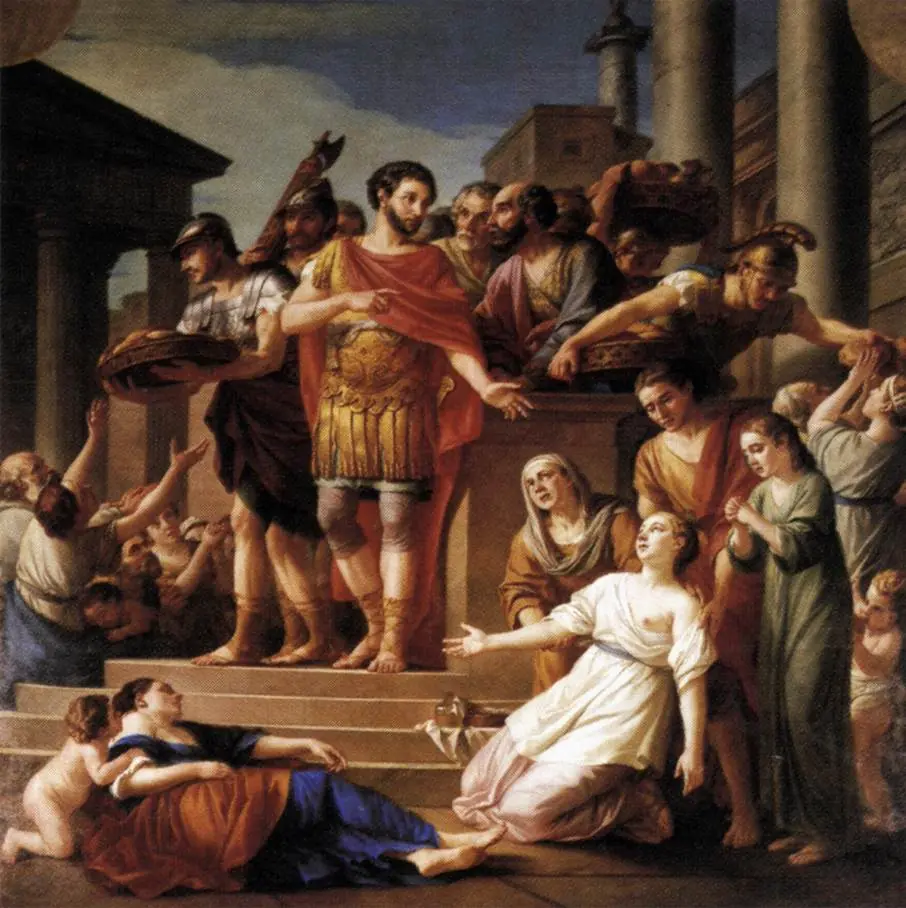
The painting is a different episode, imagined in 1765. Vien shows a distribution of bread, the public face of an emperor in a city. The sentence is a private warning about the people he expected to meet, written from a military town on the river. The same man, in another section, puts the disturbance in the judgment rather than in the event.
The artwork
Marcus Aurelius Distributing Bread to the People · Joseph-Marie Vien, 1765
Joseph-Marie Vien painted this in 1765. The title on the Wikimedia file is Marcus Aurelius Distributing Bread to the People. It is a later history painting of a public distribution, not a scene from the notebooks, and not a portrait made in his lifetime.
The quotation is the opening of Book II, which Long's translation places at Carnuntum. The canvas does not show that camp. Roman portrait busts and the bronze equestrian statue are the images that come from the reign. This is neither of those.
Joseph-Marie Vien, Marcus Aurelius Distributing Bread to the People, 1765. Public-domain painting; reproduction via Wikimedia Commons. Image file. Public domain. The painting is free of known copyright restrictions. A faithful reproduction of a two-dimensional public-domain artwork is treated as public domain in the United States; other countries may restrict reuse of the photograph.

Sources
- Marcus Aurelius, Meditations, Book II, translated by George LongPublic-domain translation, 1862. The book ends with the note 'This in Carnuntum.'
- Meditations 2.1 on Lexundria (Long translation)
- Long's endnote on CarnuntumNote 30. Long calls it a town of Pannonia on the Danube, east of Vindobona, and cites Orosius 7.15 and Eutropius 8.13 for a stay of three years during the Marcomannic wars.
- Wikimedia Commons file for Vien's painting
More like this
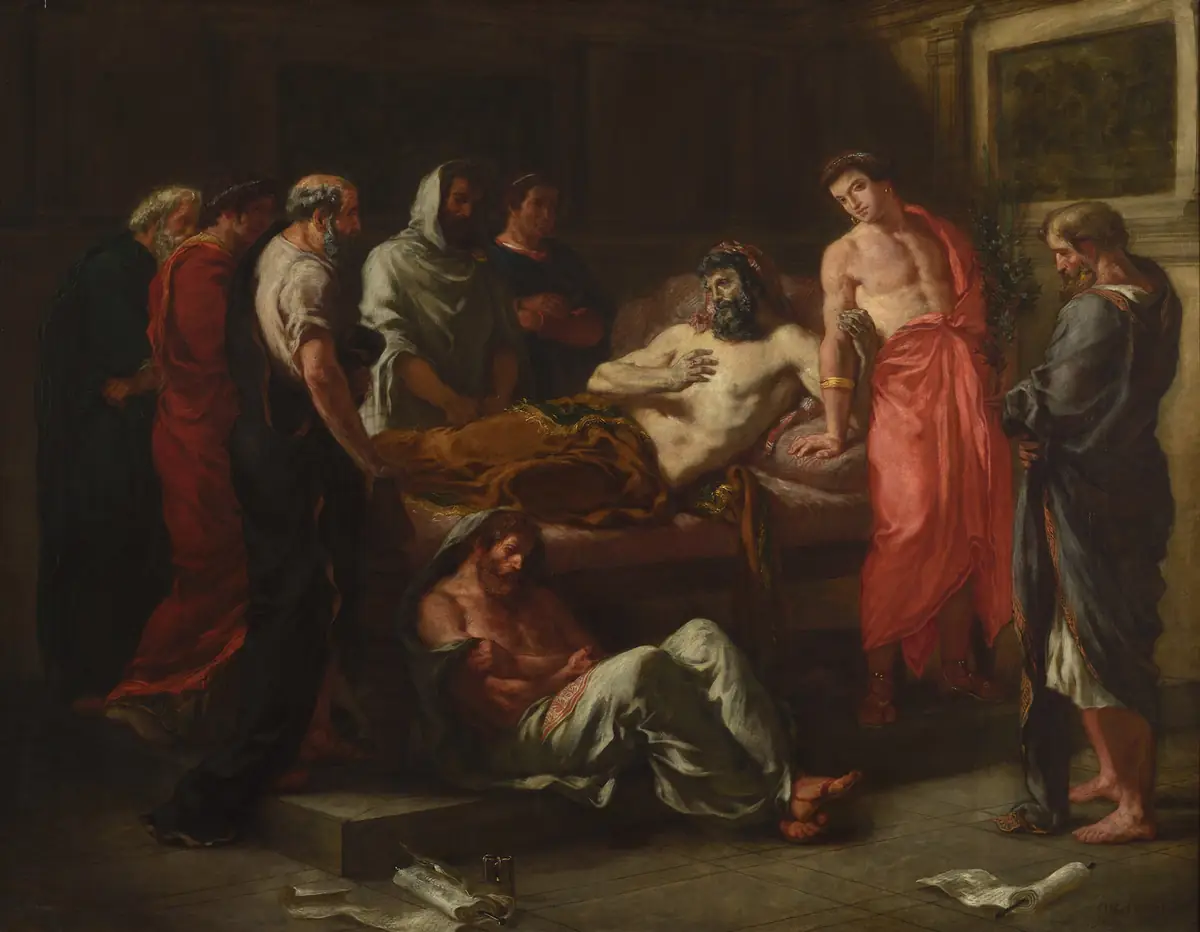
It Is Not the Thing That Disturbs You
If thou art pained by any external thing, it is not this thing that disturbs thee, but thy own judgment about it. And it is in thy power to wipe out this judgment now.
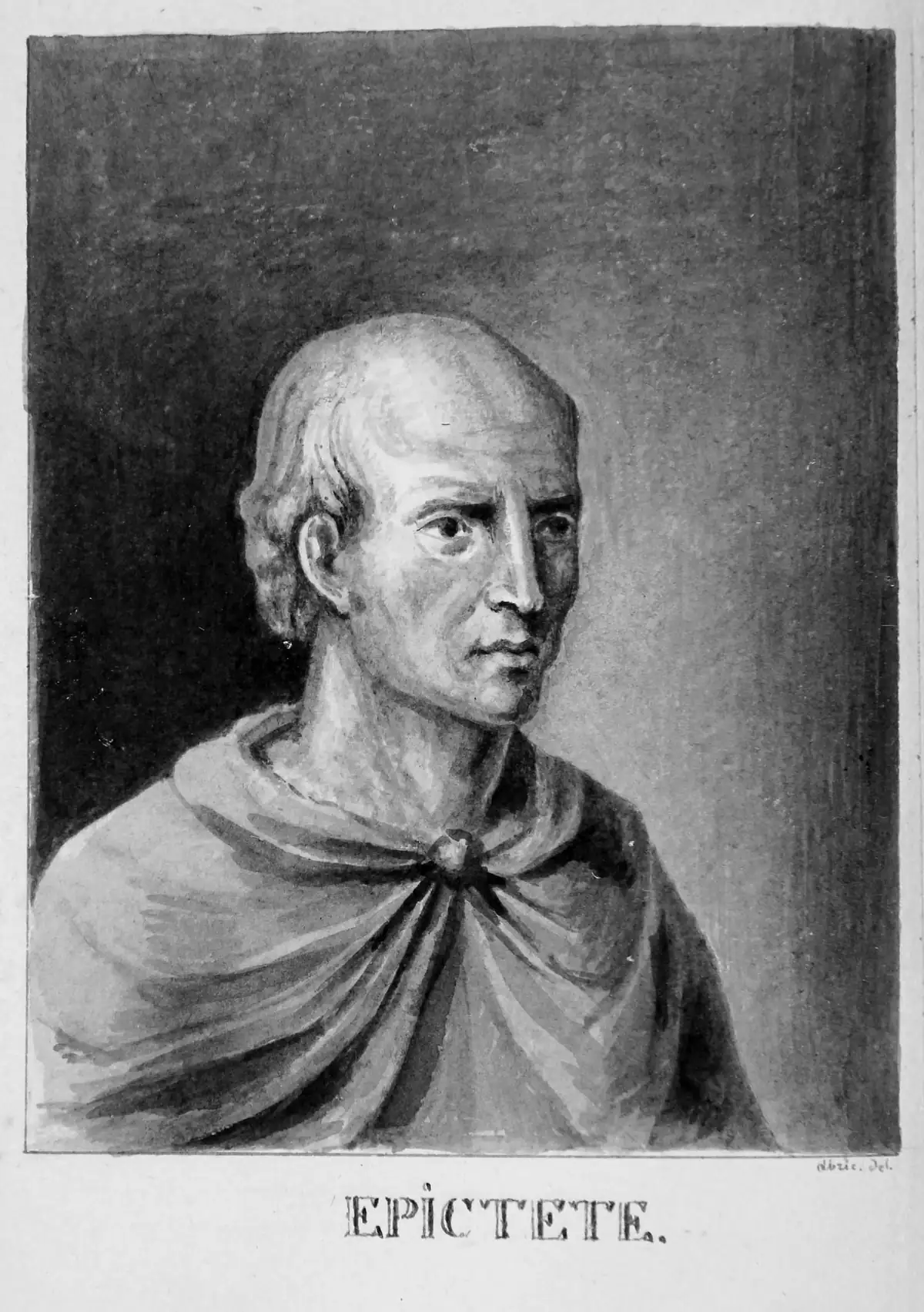
Men Are Disturbed Not by Things
Men are disturbed not by things, but by the views which they take of things.
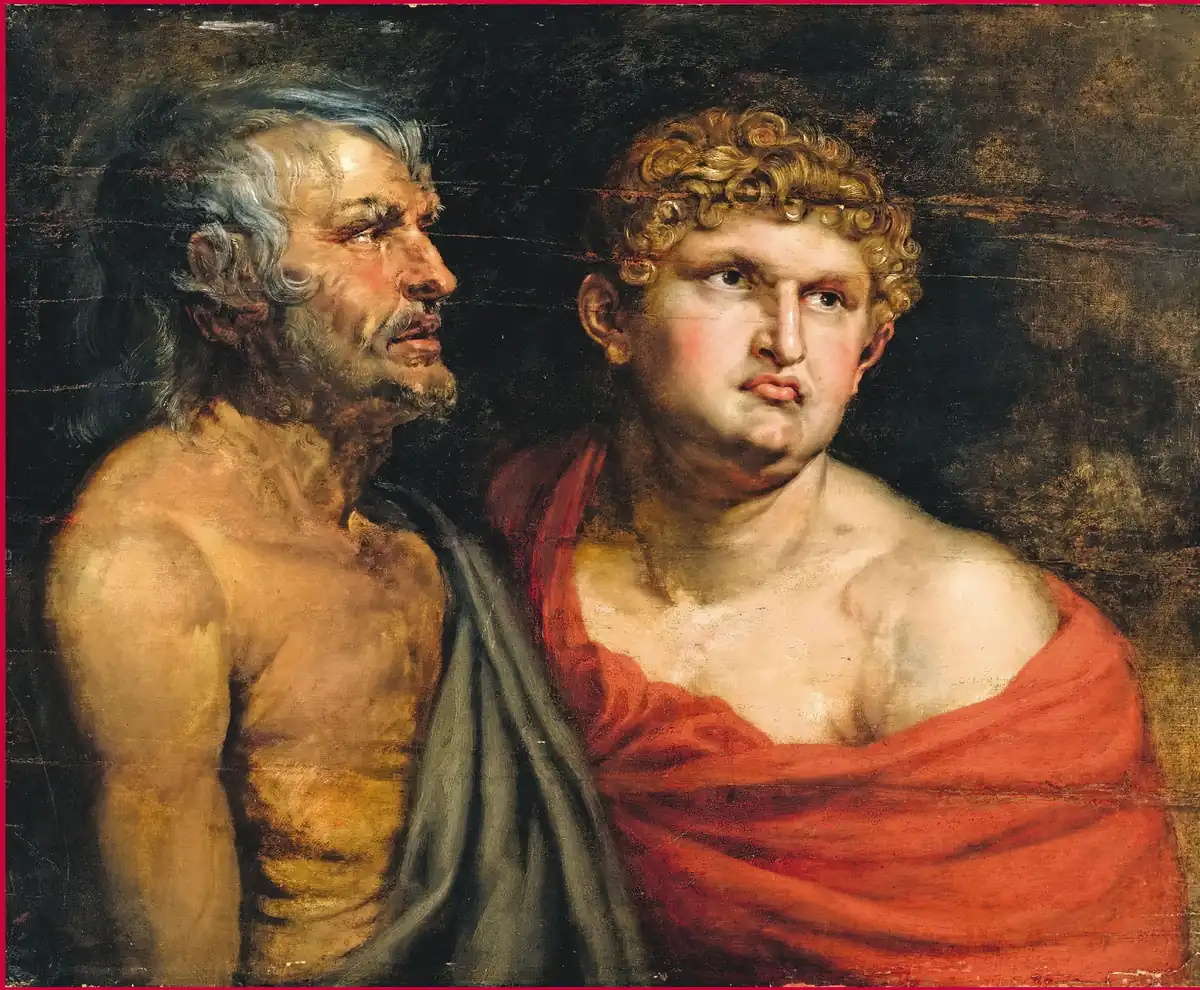
Fate Leads the Willing
Aye, the willing soul Fate leads, but the unwilling drags along.
We Suffer More Often in Imagination
There are more things, Lucilius, likely to frighten us than there are to crush us; we suffer more often in imagination than in reality.
Now I Am My Own Master
Now I am my own master.
Supreme Excellence Is Not the Battle
Hence to fight and conquer in all your battles is not supreme excellence; supreme excellence consists in breaking the enemy's resistance without fighting.