Story
Men Are Disturbed Not by Things
Men are disturbed not by things, but by the views which they take of things.
Thomas Wentworth Higginson's 1890 translation of the Enchiridion, chapter 5. The handbook was arranged by Arrian from Epictetus's teaching. It is not a book Epictetus sat down and published.
No post link has been added yet. When a cut is published, it will be listed here. The accounts are Instagram, X, YouTube, Pinterest.
The story
Epictetus did not write the Enchiridion as a finished book. His student Arrian kept notes of the teaching and arranged this short handbook from them. Chapter 5 opens with the sentence above. Higginson’s 1890 English is the public-domain wording on this page.
The next sentences use a death everyone in the room would have known. Death is nothing terrible, Higginson has him say, or it would have appeared so to Socrates. The terror is in the notion that death is terrible. When you are hindered, disturbed, or grieved, do not put it on other people. Put it on your own views.
He then sorts people by what they do with that fact. An uninstructed person blames others for his misfortunes. Someone just starting the work blames himself. Someone fully instructed blames neither others nor himself. The line about “views” is the door. The chapter walks through it.
The same move shows up later in Marcus Aurelius, who had read this tradition and wrote a private version of it in Meditations 8.47. Epictetus was not an emperor taking notes on campaign. The ancient account is that he had been enslaved in Rome, was later freed, and was banished from the city under Domitian. He taught after that at Nicopolis. The handbook’s example is still Socrates, and the thing it asks you to inspect is the view, not the event.
The artwork
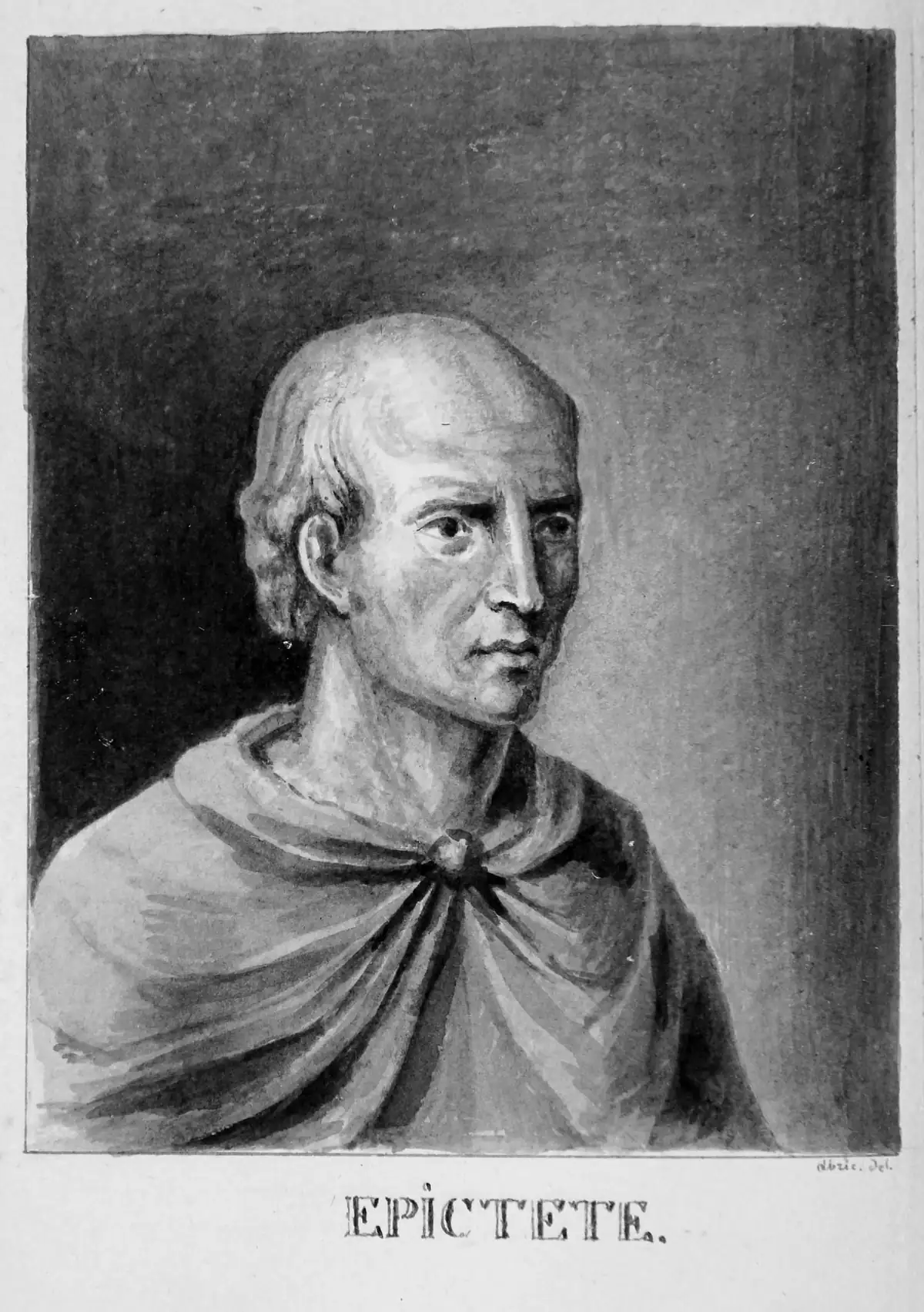
Imaginary portrait of Epictetus · Abric, 1653
This is a drawing in Indian ink from a 1653 book of moral extracts, made by an artist the volume names as Abric. It is an imagined face for Epictetus, more than fifteen centuries after he taught. No portrait from his lifetime is known.
The book groups him with Socrates, Plutarch, and Seneca. The drawing does not illustrate chapter 5 of the Enchiridion, and it is not evidence of what he looked like.
Abric, imaginary portrait of Epictetus, 1653. Indian ink, from Jean Desmarets de Saint-Sorlin, Les Morales d'Epictète, de Socrate, de Plutarque, et de Sénèque. Public-domain drawing; reproduction via Wikimedia Commons. Image file. Public domain. The drawing is free of known copyright restrictions. A faithful reproduction of a two-dimensional public-domain work is treated as public domain in the United States; other countries may restrict reuse of the photograph.

Sources
- Epictetus, Enchiridion, chapter 5, translated by Thomas Wentworth HigginsonPublic-domain translation. Perseus prints the New York edition of Thomas Nelson and Sons, 1890.
- Wikimedia Commons file for the 1653 drawingThe file description identifies the book, the artist name Abric, and the drawing as imaginary.
More like this
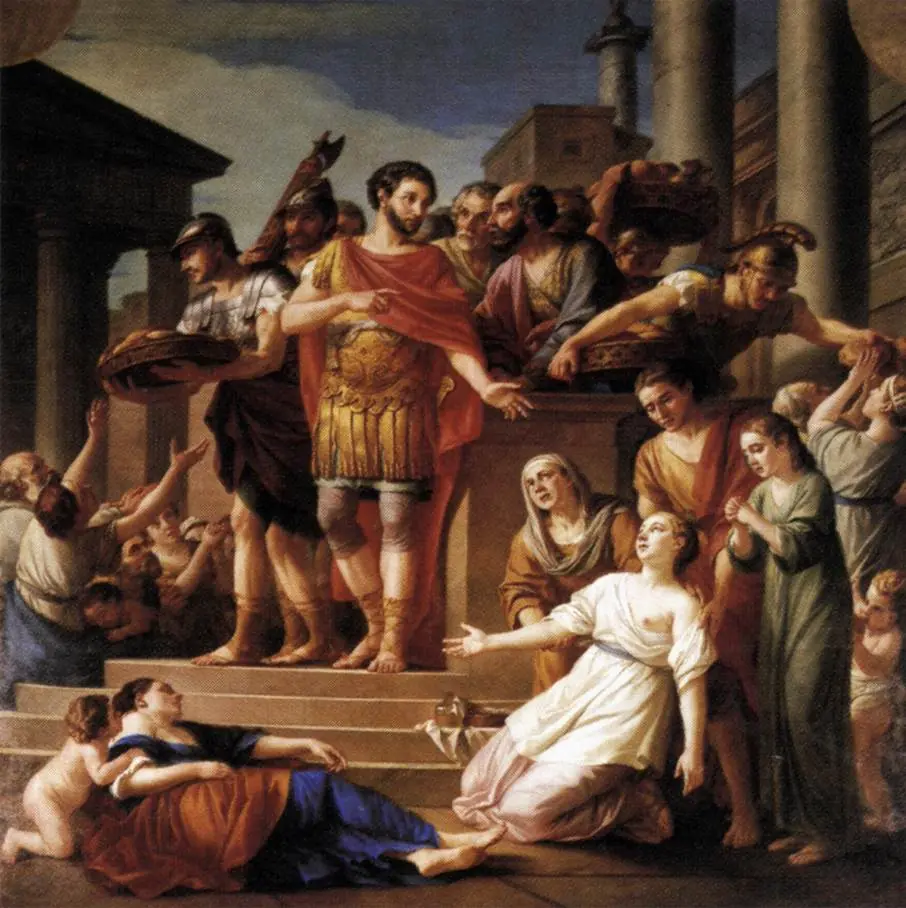
Begin the Morning by Saying
Begin the morning by saying to thyself, I shall meet with the busybody, the ungrateful, arrogant, deceitful, envious, unsocial.
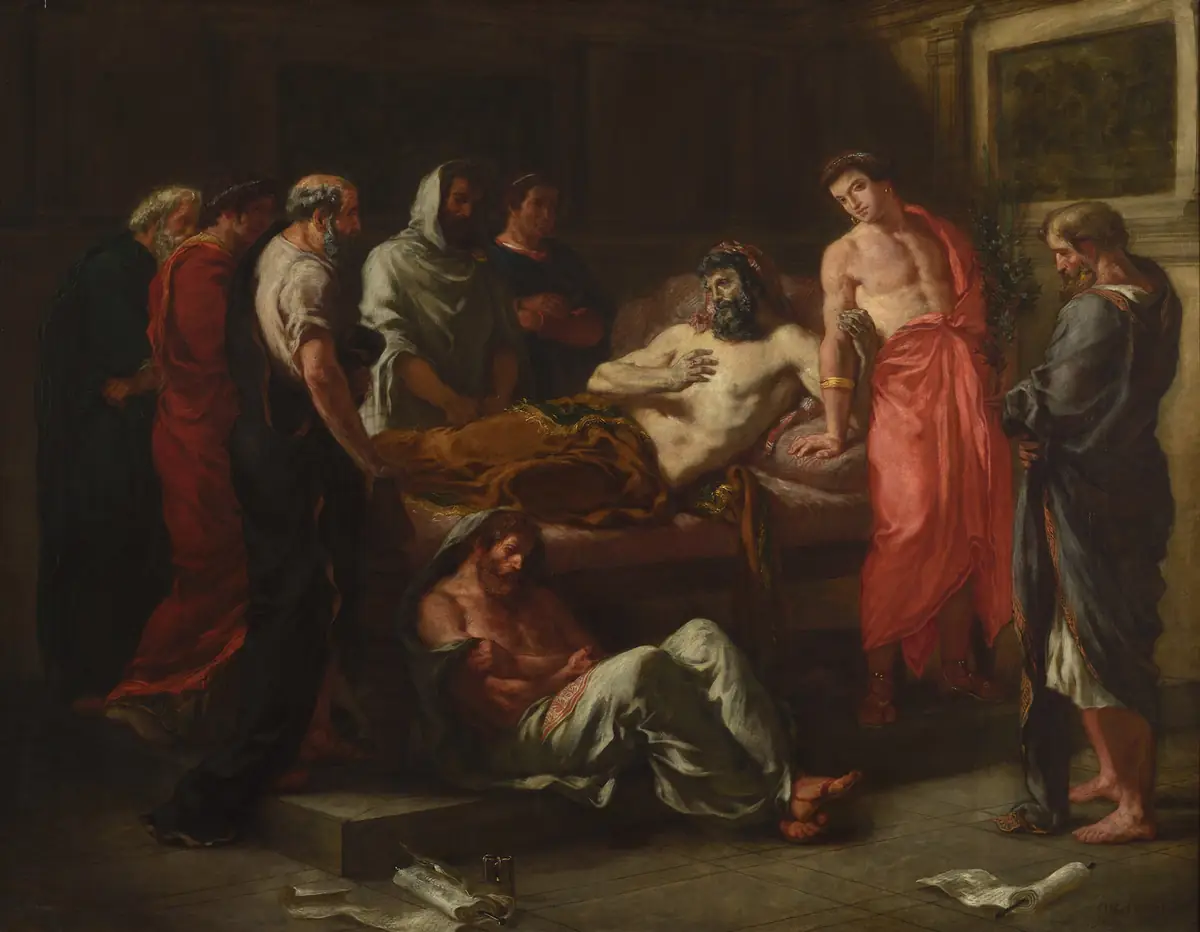
It Is Not the Thing That Disturbs You
If thou art pained by any external thing, it is not this thing that disturbs thee, but thy own judgment about it. And it is in thy power to wipe out this judgment now.
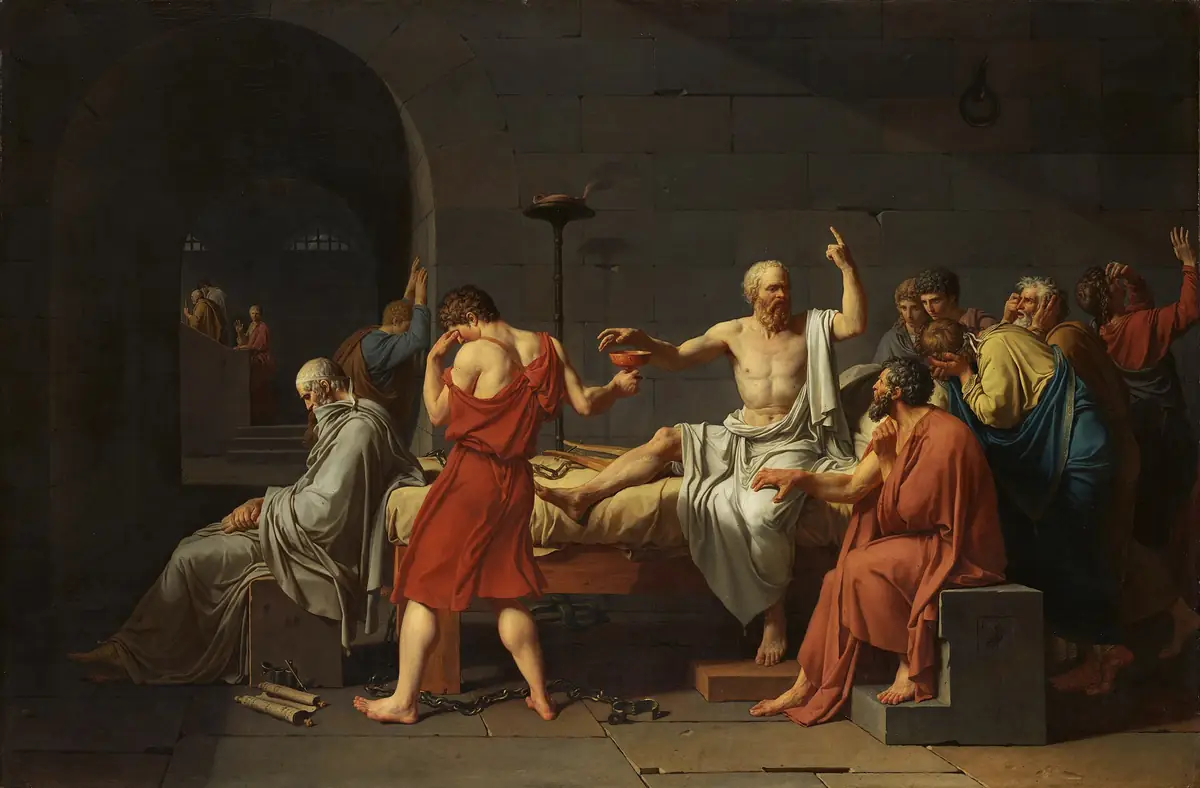
A Cock to Asclepius
Crito, I owe a cock to Asclepius; will you remember to pay the debt?
Fate Leads the Willing
Aye, the willing soul Fate leads, but the unwilling drags along.
We Suffer More Often in Imagination
There are more things, Lucilius, likely to frighten us than there are to crush us; we suffer more often in imagination than in reality.
Now I Am My Own Master
Now I am my own master.