Story
Supreme Excellence Is Not the Battle
Hence to fight and conquer in all your battles is not supreme excellence; supreme excellence consists in breaking the enemy's resistance without fighting.
The shorter line "The supreme art of war is to subdue the enemy without fighting" is a modern paraphrase of this sentence, not Lionel Giles's 1910 wording. Giles's phrase "breaking the enemy's resistance" is his English. The Chinese sentence is about making the enemy submit without a battle. The chapter is "Attack by Stratagem," chapter 3 of The Art of War.
No post link has been added yet. When a cut is published, it will be listed here. The accounts are Instagram, X, YouTube, Pinterest.
The story
The Art of War is a short Chinese military book in thirteen chapters. The sentence quoted here is from the opening of chapter 3, “Attack by Stratagem,” in the 1910 English translation by Lionel Giles. That translation is in the public domain.
Giles has Sun Tzu say that the best result in war is to take the enemy’s country whole, and that shattering it is worse. Capturing an army intact is better than destroying it. From that he draws the line above: winning every fight is not the highest skill. The highest skill is breaking the enemy’s resistance without fighting.
The next sentences rank the methods. The best is to balk the enemy’s plans. Next is to keep their forces from joining. Next is to fight their army in the field. The worst policy is to besiege walled cities. Giles then describes the cost of a siege: months of preparation, mounds raised against the walls, and the general who loses his temper and launches men “like swarming ants,” so that a third of them die while the town is still untaken. The skilful leader, in the same chapter, subdues the enemy’s troops without fighting, takes cities without a siege, and overthrows a kingdom without a long campaign in the field.
Who wrote this is less settled than the book’s fame. “Sun Tzu” means Master Sun. Tradition, recorded centuries later by Sima Qian in the Records of the Grand Historian, says Sun Wu served King Helü of Wu in the late sixth century BCE. The famous anecdote has him drilling the king’s women and executing two favorite concubines when they laughed at the drill. Giles repeats that story in his introduction. It is a traditional biography, not a life we can confirm, and this page does not treat it as established fact.
Historians also disagree about the book itself. Some keep a sixth-century author. Many treat the text we have as a work that took shape later, in the Warring States period, still under the Zhou dynasty, but not as the notebook of one general at Helü’s court. The English sentence can be cited without pretending the legend is a documented career. The citable text is Giles’s chapter 3. The shorter modern line about “the supreme art of war” is a paraphrase of it, not the 1910 wording.
The artwork
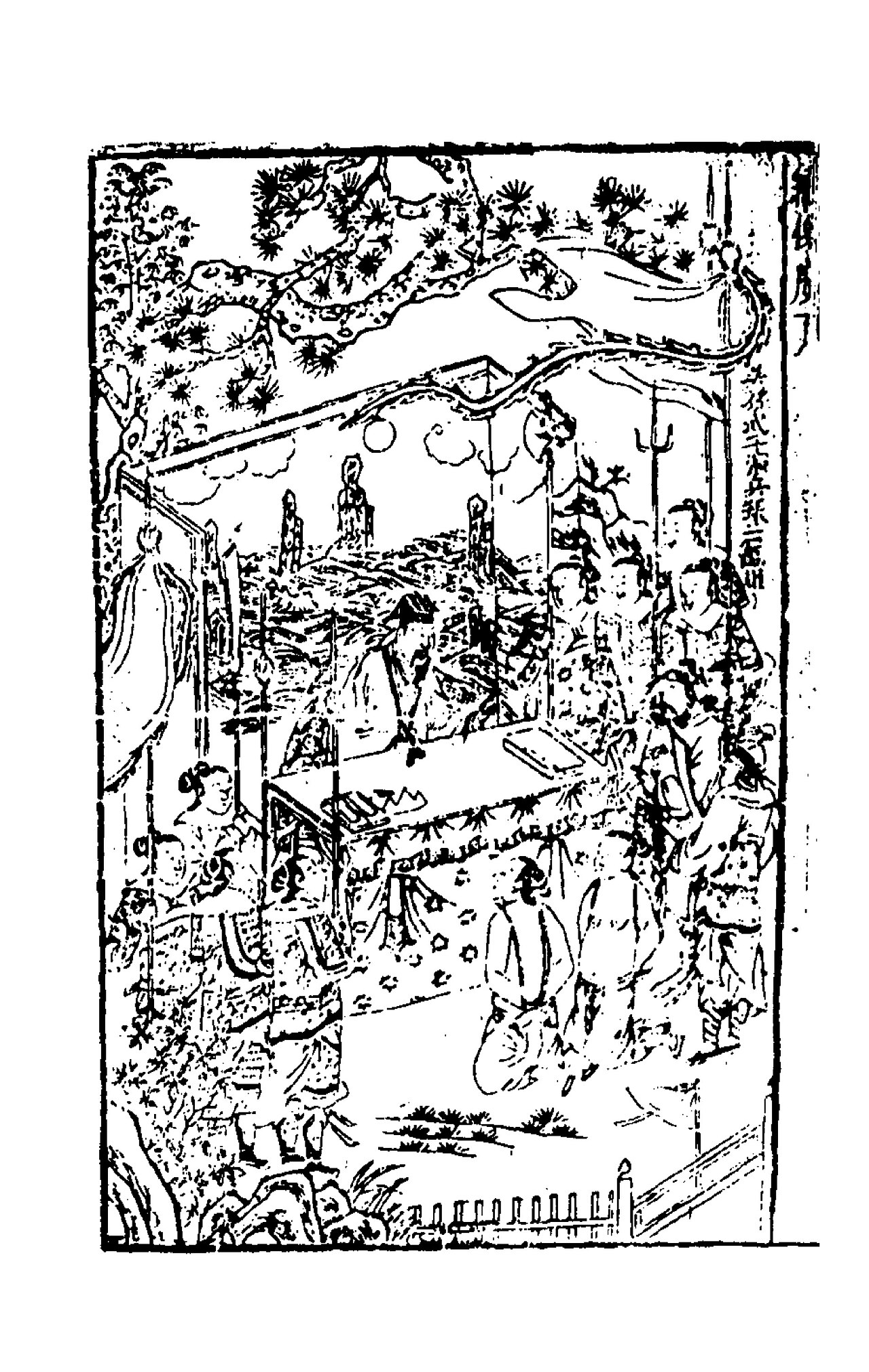
Imaginary portrait of Sun Wu · Unknown illustrator, 1643
This is not a painting from Sun Tzu's century, and it is not evidence of a face. It is a woodblock portrait printed in 1643, the date recorded for this impression on Wikimedia Commons, in an illustrated Chinese book of famous generals. The full title on the file is 新鐫繡像旁批詳註總斷廣百將傳, a newly cut illustrated edition, with notes and judgments, of the Expanded Biographies of a Hundred Generals.
The figure has the conventional look of a wise commander: beard, robes, a calm stance. That is how a seventeenth-century illustrator drew a name from the classics. If the traditional dates are anywhere near right, the print was made more than two thousand years later. No portrait from his lifetime is known. Use the picture as a document of later fame, not as a likeness.
The quotation beside it is about refusing the battle, not about looking like a general. In the same chapter Giles describes the commander who cannot govern his temper and sends men against a wall "like swarming ants," losing a third of them while the city is still untaken. The print's calm face is an illustrator's idea. The chapter's warning is about the general who is not calm.
Unknown illustrator, imaginary portrait of Sun Wu (Sun Tzu), woodblock, dated 1643 on the Wikimedia Commons file, from an illustrated edition of the Expanded Biographies of a Hundred Generals. Not a contemporary likeness. Public-domain image via Wikimedia Commons. Image file. Public domain. Wikimedia Commons marks the print and this reproduction as free of known copyright restrictions.

Sources
- Sun Tzu, The Art of War, chapter 3, Attack by Stratagem, translated by Lionel GilesPublic-domain translation, 1910. The quotation is paragraph 2.
- The Art of War, Giles edition, on Project GutenbergIncludes Giles's 1910 introduction, which retells the traditional life from Sima Qian.
- The Art of War (Giles) on Wikisource
- Wikimedia Commons file for the 1643 woodblock portraitImage source. The file record dates the print to 1643 and names no artist.
More like this
We Suffer More Often in Imagination
There are more things, Lucilius, likely to frighten us than there are to crush us; we suffer more often in imagination than in reality.
It Is Not the Thing That Disturbs You
If thou art pained by any external thing, it is not this thing that disturbs thee, but thy own judgment about it. And it is in thy power to wipe out this judgment now.