Story
Stand Out of My Light
Stand out of my light.
Diogenes Laertius 6.38, translated by Robert Drew Hicks (Loeb, 1925). The line often shared as "Stand out of my sunlight" is a paraphrase of this sentence. Plutarch, in the Dryden translation revised by Clough, gives a longer answer in the same meeting: "I would have you stand from between me and the sun."
No post link has been added yet. When a cut is published, it will be listed here. The accounts are Instagram, X, YouTube, Pinterest.
The story
The Greeks had met at the Isthmus and named Alexander their general against Persia. Plutarch says ministers and philosophers came to congratulate him. Diogenes of Sinope, who was living at Corinth, did not. Alexander found him lying in the sun in the suburb called the Cranium.
Clough’s revision of the Dryden Life of Alexander has Diogenes raise himself a little when the crowd arrives. Alexander asks whether he wants anything. “Yes,” said he, “I would have you stand from between me and the sun.” The followers laugh at the rudeness. Alexander tells them that if he were not Alexander, he would choose to be Diogenes.
Diogenes Laertius, in Hicks’s 1925 translation, tells the request more briefly. Alexander stands over him in the Craneum and says, “Ask of me any boon you like.” The answer is, “Stand out of my light.” The wish to have been Diogenes is in Laertius too, but in an earlier section, reported on its own: “Had I not been Alexander, I should have liked to be Diogenes.” Plutarch makes it the next sentence, spoken to the men who laughed. Laertius does not tie the two remarks into one afternoon.
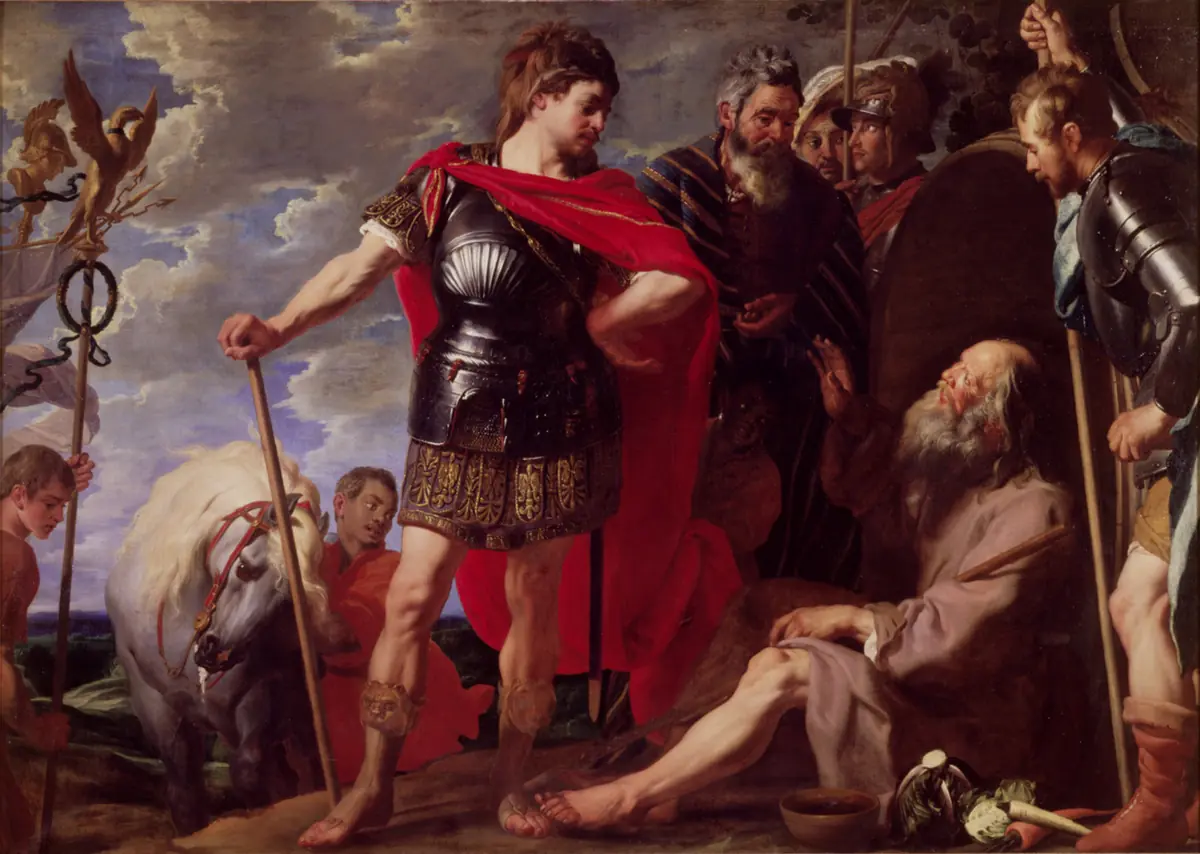
“Stand out of my sunlight” is the wording that travels now. It is a paraphrase. The citable public-domain sentences are Hicks’s “Stand out of my light” and Clough’s “stand from between me and the sun.” De Crayer’s canvas, from about 1625 to 1630, puts the seated man in front of the king and the army. The useful difference between the two ancient books is whether Alexander’s admiration was part of that meeting or a saying remembered separately. The night he refused to steal a victory is a different story, years later, before Gaugamela.
The artwork
Alexander and Diogenes · Gaspar de Crayer, About 1625–1630
Gaspar de Crayer painted Alexander and Diogenes around 1625 to 1630. Alexander stands over a man seated low in the foreground, with a crowd of soldiers and horses behind the king. It is a Baroque history painting of the Corinth meeting. It is not a portrait of either man from life.
Hicks's short sentence and Clough's longer one are two ancient reports of one request. The canvas can show the king in the light. It cannot decide the wording.
Gaspar de Crayer, Alexander and Diogenes, about 1625–1630. Oil on canvas. Wallraf-Richartz Museum, Cologne. Public-domain painting; reproduction via Wikimedia Commons. Image file. Public domain. The painting is free of known copyright restrictions. A faithful reproduction of a two-dimensional public-domain artwork is treated as public domain in the United States; other countries may restrict reuse of the photograph.

Sources
- Diogenes Laertius, Lives of the Eminent Philosophers, Book 6, translated by Robert Drew HicksPublic-domain Loeb translation, 1925. Section 38 has 'Stand out of my light.' Section 32 has Alexander's wish to have been Diogenes, told separately.
- Plutarch, Life of Alexander, Dryden translation revised by Arthur Hugh CloughPublic-domain revision, 1865. The Cranium meeting, the sun, and Alexander's remark to his followers are one scene.
- Wikimedia Commons file for de Crayer's paintingDated between 1625 and 1630. Credit on the file names the Wallraf-Richartz Museum.
More like this
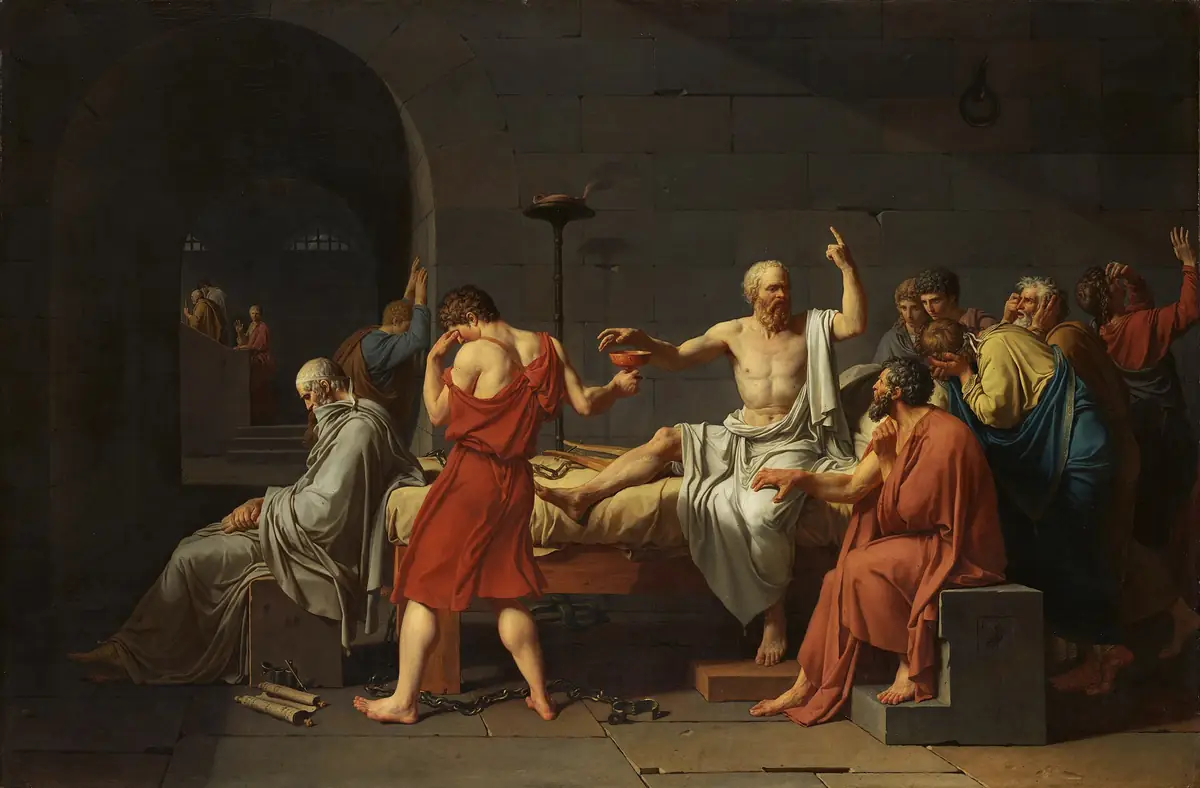
A Cock to Asclepius
Crito, I owe a cock to Asclepius; will you remember to pay the debt?
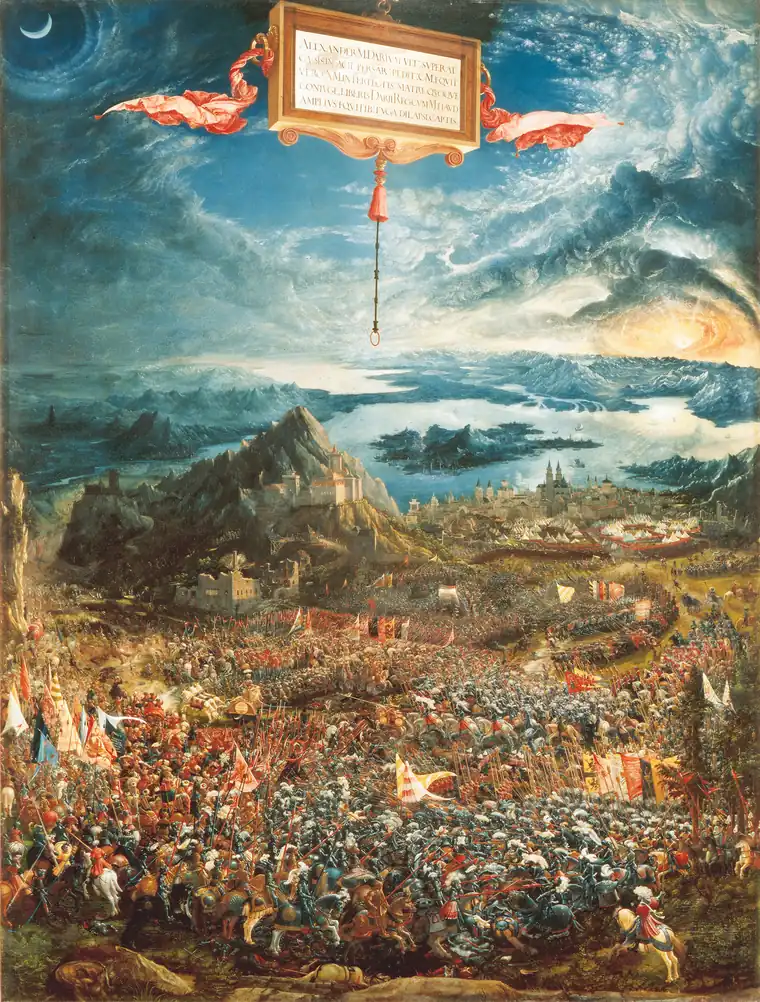
I Will Not Steal a Victory
I will not steal a victory.
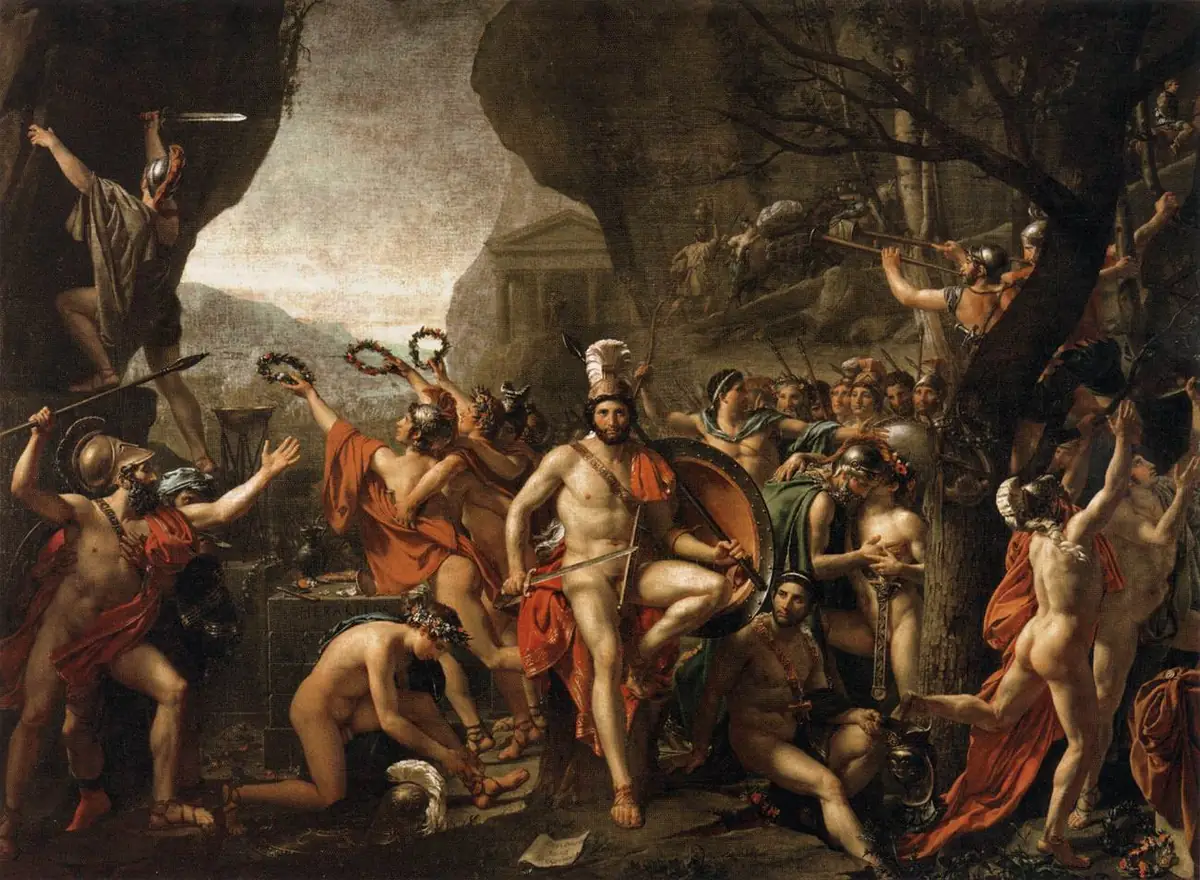
Come and Take Them
Come and take them.
Do Not Disturb My Circles
Do not disturb my circles.
And Yet It Moves
Eppur si muove; that is, still it moves.
The Die Is Cast
The die is cast.