Story
Do Not Disturb My Circles
Do not disturb my circles.
Anecdote. This English sentence, and the Latin "Noli turbare circulos meos," are later tidy formulations. Plutarch's Life of Marcellus, in Bernadotte Perrin's 1917 translation, does not give those words and does not mention circles. He gives three versions of the killing, and they disagree.
No post link has been added yet. When a cut is published, it will be listed here. The accounts are Instagram, X, YouTube, Pinterest.
The story
In 212 BCE a Roman army under Marcellus took Syracuse, on Sicily, during the Second Punic War. Hannibal was still in Italy. Archimedes was in the city. Plutarch says his machines had held the Romans off the walls for a long time, and that what grieved Marcellus most was the mathematician’s death.
Perrin’s 1917 translation gives three accounts, and they are not the same story. In the first, Archimedes is alone, working a problem with a diagram, and does not notice that the city has fallen. A soldier orders him to come to Marcellus. He refuses until he has finished the demonstration. The soldier draws his sword and kills him. In the second, the soldier arrives already threatening to kill him at once, and Archimedes begs for a little time so the result will not be left incomplete. The soldier does not wait. In the third, Archimedes is carrying mathematical instruments to Marcellus, sundials and spheres and quadrants, and soldiers kill him because they think the box is full of gold.
What the three share is that Marcellus was angry, turned from the killer as from a polluted man, and looked after Archimedes’ family. What they do not share is a sentence. “Do not disturb my circles,” and the Latin Noli turbare circulos meos, are a later way of making the first version neat. Plutarch’s diagram is a diagram. He does not say it was circles, and he does not quote a plea to leave them alone.
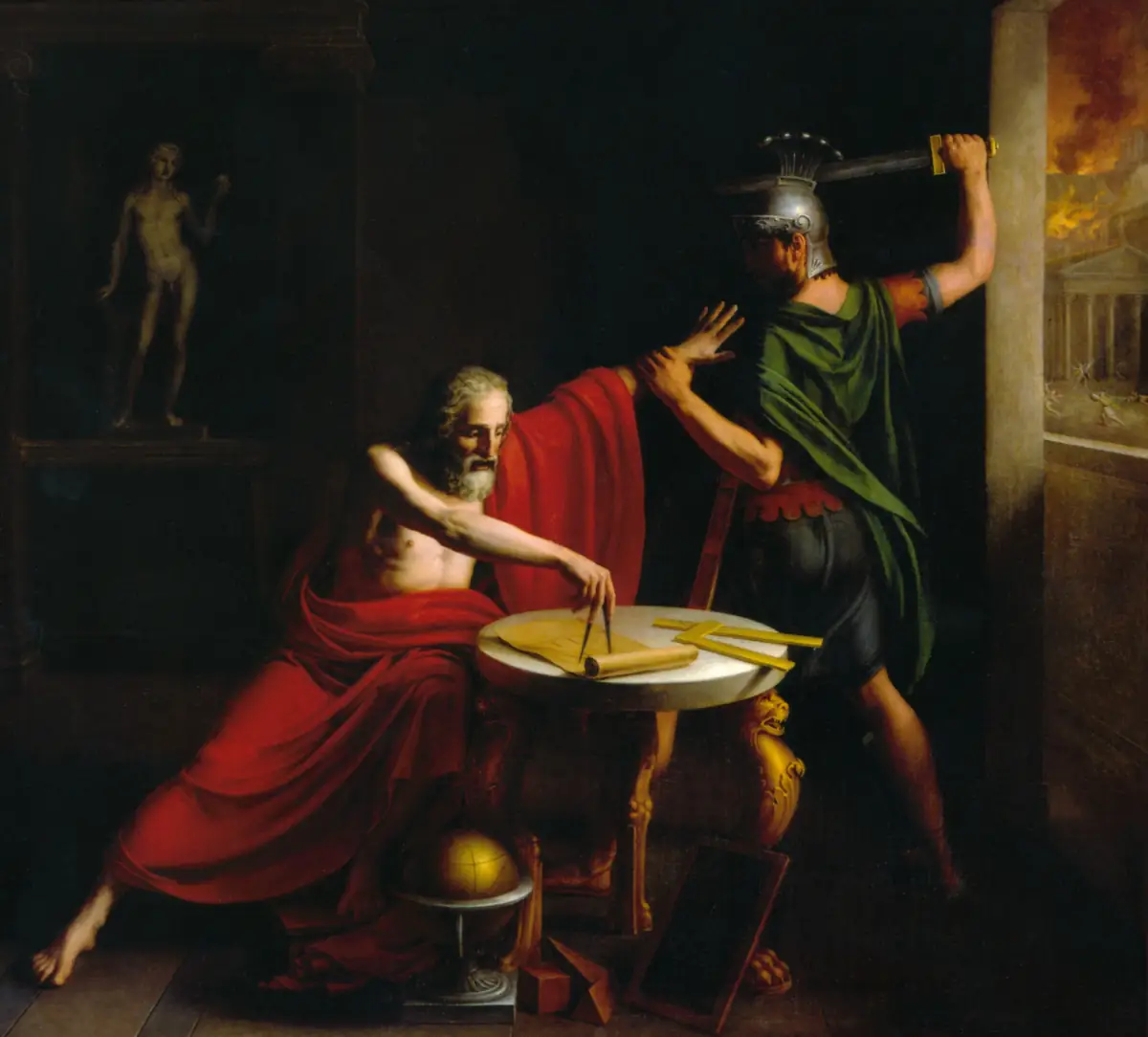
Degeorge’s Death of Archimedes (1815) picks the tidy scene: the old man, the drawing, the soldier. The curiosity in the ancient text is the third version, which has no diagram at all. He dies because the instruments looked like treasure. The war around that afternoon is the same war as the boyhood oath Hannibal was said to have sworn.
The artwork
The Death of Archimedes · Thomas Degeorge, 1815
Thomas Degeorge painted The Death of Archimedes in 1815. A soldier bursts in on an old man bent over a diagram. The picture chooses one later version of the death and gives it a body. It is not a Greek or Roman image, and it is not a portrait of Archimedes.
Plutarch, who is already centuries after 212 BCE, never mentions circles. The canvas paints the anecdote in its tidied form: the diagram, the interruption, the sword. The ancient report is messier than the painting.
Thomas Degeorge, The Death of Archimedes, 1815. Oil on canvas. A later imagining of the anecdote, not a document of 212 BCE. Public-domain painting; reproduction via Wikimedia Commons. Image file. Public domain. The painting is free of known copyright restrictions. A faithful reproduction of a two-dimensional public-domain artwork is treated as public domain in the United States; other countries may restrict reuse of the photograph.

Sources
- Plutarch, Life of Marcellus 19, translated by Bernadotte PerrinPublic-domain Loeb translation, 1917. Three versions of the death. None is the circles sentence.
- Wikimedia Commons file for Degeorge's paintingDated 1815.
More like this
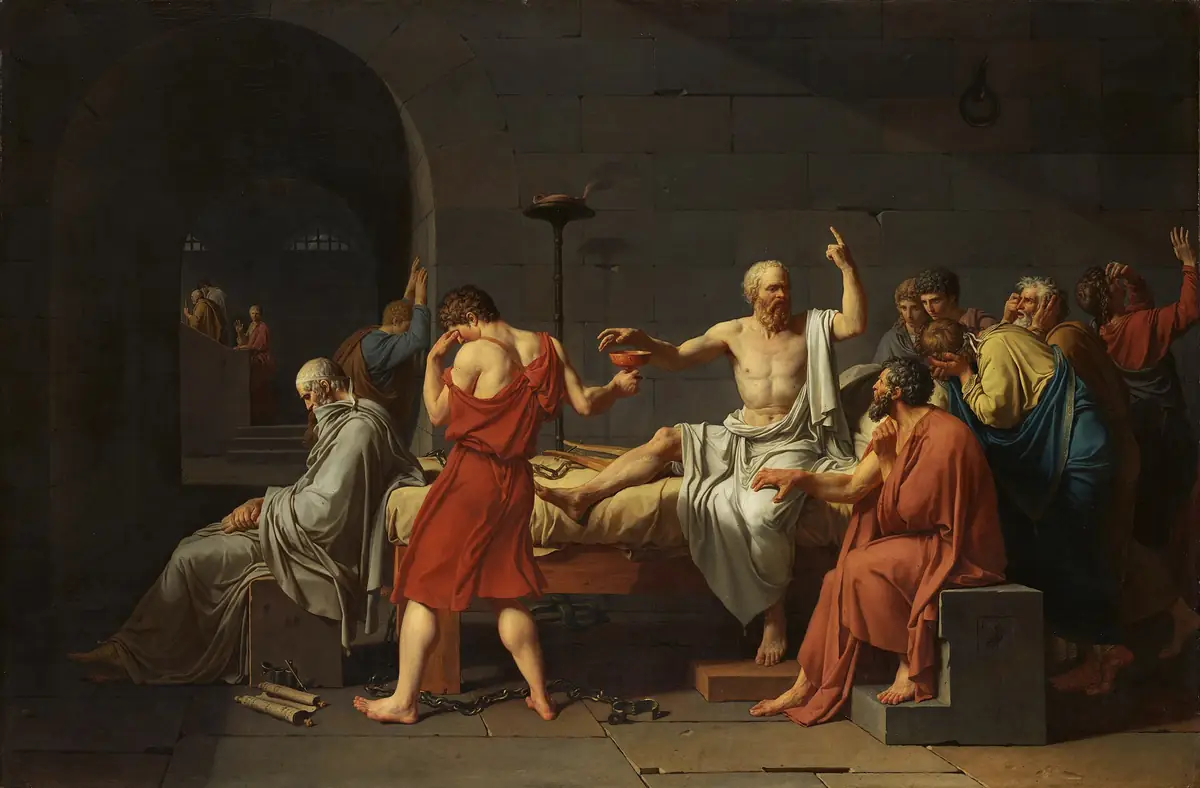
A Cock to Asclepius
Crito, I owe a cock to Asclepius; will you remember to pay the debt?
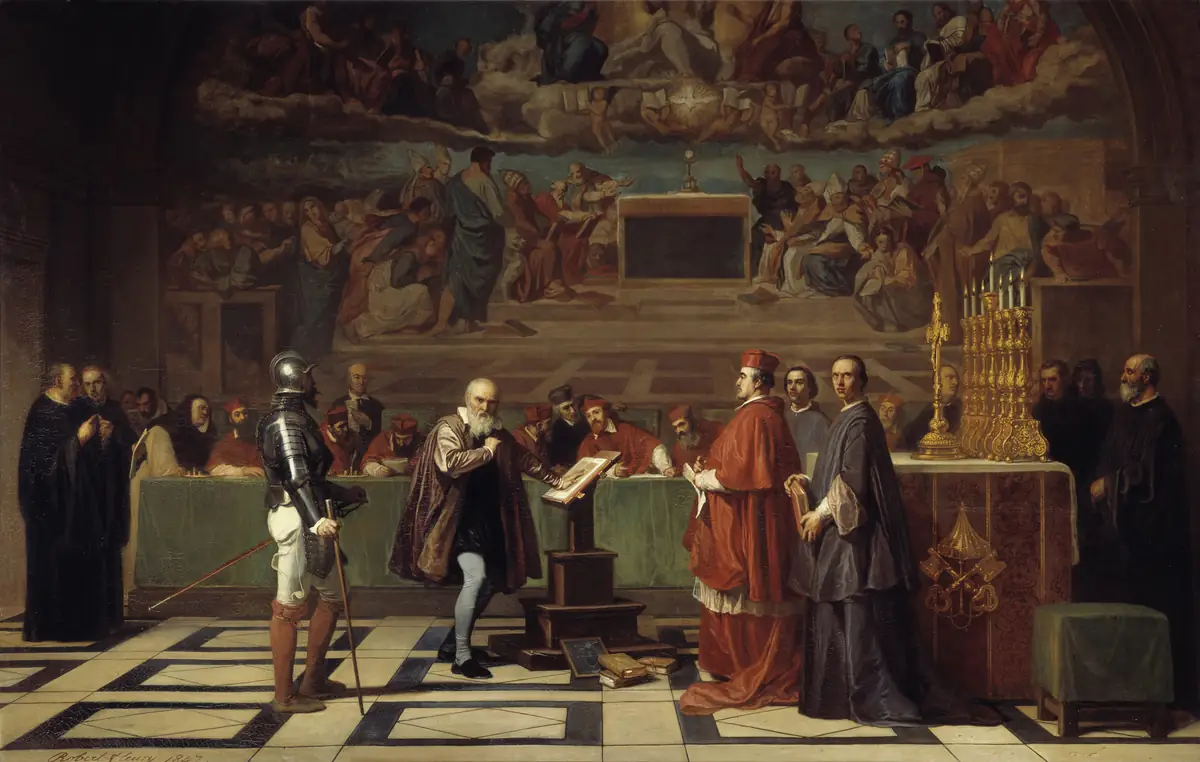
And Yet It Moves
Eppur si muove; that is, still it moves.
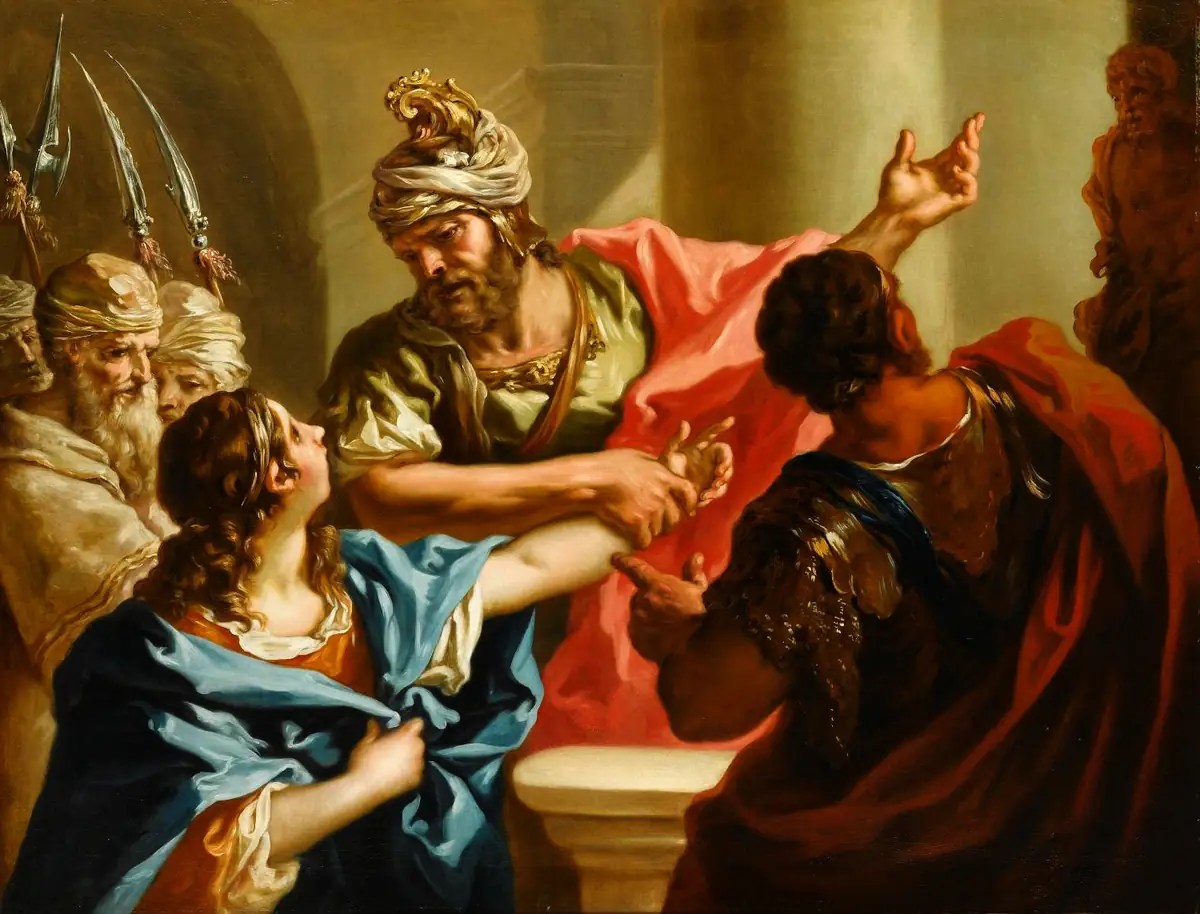
An Enemy to Rome
Swear never to be the friend of the Romans.
Now I Am My Own Master
Now I am my own master.
Stand Out of My Light
Stand out of my light.
Come and Take Them
Come and take them.