Story
I Will Not Steal a Victory
I will not steal a victory.
Plutarch, Life of Alexander, in the Dryden translation as revised by A. H. Clough (1865). The night before Gaugamela, 331 BCE, not the night before Issus. Some of his own officers thought the reply boyish. "No more worlds to conquer" is not a sentence in this life.
No post link has been added yet. When a cut is published, it will be listed here. The accounts are Instagram, X, YouTube, Pinterest.
The story
The largest battle Alexander fought with Darius was not, Plutarch says, at Arbela, as most writers had it, but at Gaugamela. Clough’s revision of the Dryden translation describes the plain at night full of the Persians’ fires, and a noise like a distant ocean. The oldest commanders, Parmenio first among them, decided a daylight attack was too dangerous. They met the king as he came from sacrificing and asked him to attack in the dark, so the night would hide the risk.
His answer, in that translation, is the sentence above: “I will not steal a victory.” Some who heard it thought it a boyish way of playing with danger. Others took it as confidence. He did not want to leave Darius an excuse. After Issus, Darius had blamed mountains, narrow passes, and the sea. If this defeat could be blamed on the dark, he would still have men and country enough to fight again. Alexander wanted a result Darius could not explain away.
Then he went into his tent and slept more deeply than usual. In the morning the commanders had to order breakfast themselves. Time ran out. Parmenio went to the bed, called his name two or three times, woke him, and asked how he could sleep before the most important battle of all as if he were already victorious. Alexander, smiling, asked whether they were not already so, since they had finally stopped chasing Darius across an empty country in the hope that he would stand.
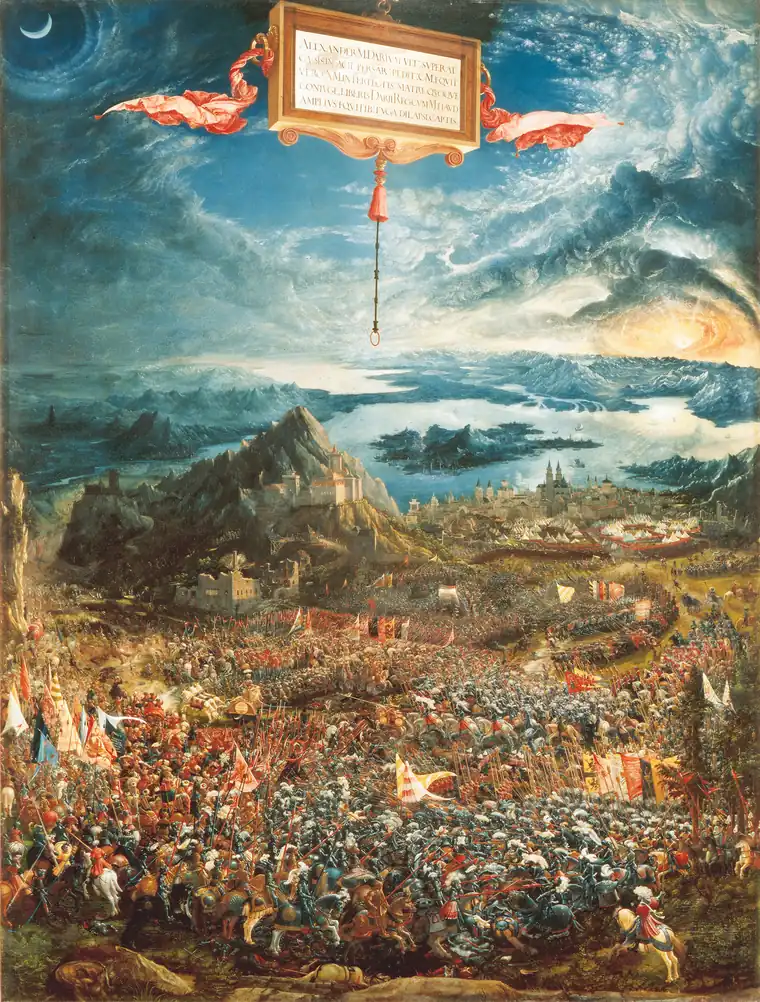
Altdorfer’s great panel of 1529 is titled The Battle of Alexander at Issus. It is the earlier battle, the one Darius afterward blamed on the ground. The night of the stolen victory that was refused, and of the king who had to be shaken awake, is Gaugamela. Another meeting from the same life, years earlier at Corinth, is the one with Diogenes.
The artwork
The Battle of Alexander at Issus · Albrecht Altdorfer, 1529
Albrecht Altdorfer painted The Battle of Alexander at Issus in 1529. From high above, two armies fill a plain between mountains and a curl of sea, and the sky is a storm of light. The battle in the title is Issus, in 333 BCE. The quotation on this page is from the night before Gaugamela, two years later.
The panel is a Renaissance vision of a world battle, not a map drawn for Alexander's staff, and not a portrait. It is the wrong night on purpose if you come to it from the quote. The picture people reach for is Issus. The sentence is Gaugamela.
Albrecht Altdorfer, The Battle of Alexander at Issus, 1529. Oil on panel. Alte Pinakothek, Munich. Public-domain painting; reproduction via Wikimedia Commons. Image file. Public domain. The painting is free of known copyright restrictions. A faithful reproduction of a two-dimensional public-domain artwork is treated as public domain in the United States; other countries may restrict reuse of the photograph.

Sources
- Plutarch, Life of Alexander, Dryden translation revised by Arthur Hugh CloughPublic-domain revision, 1865. The night attack, the reply, and the morning when Parmenio wakes him are in the Gaugamela narrative.
- Wikimedia Commons file for Altdorfer's Battle of Alexander at IssusDated 1529. The title names Issus.
More like this
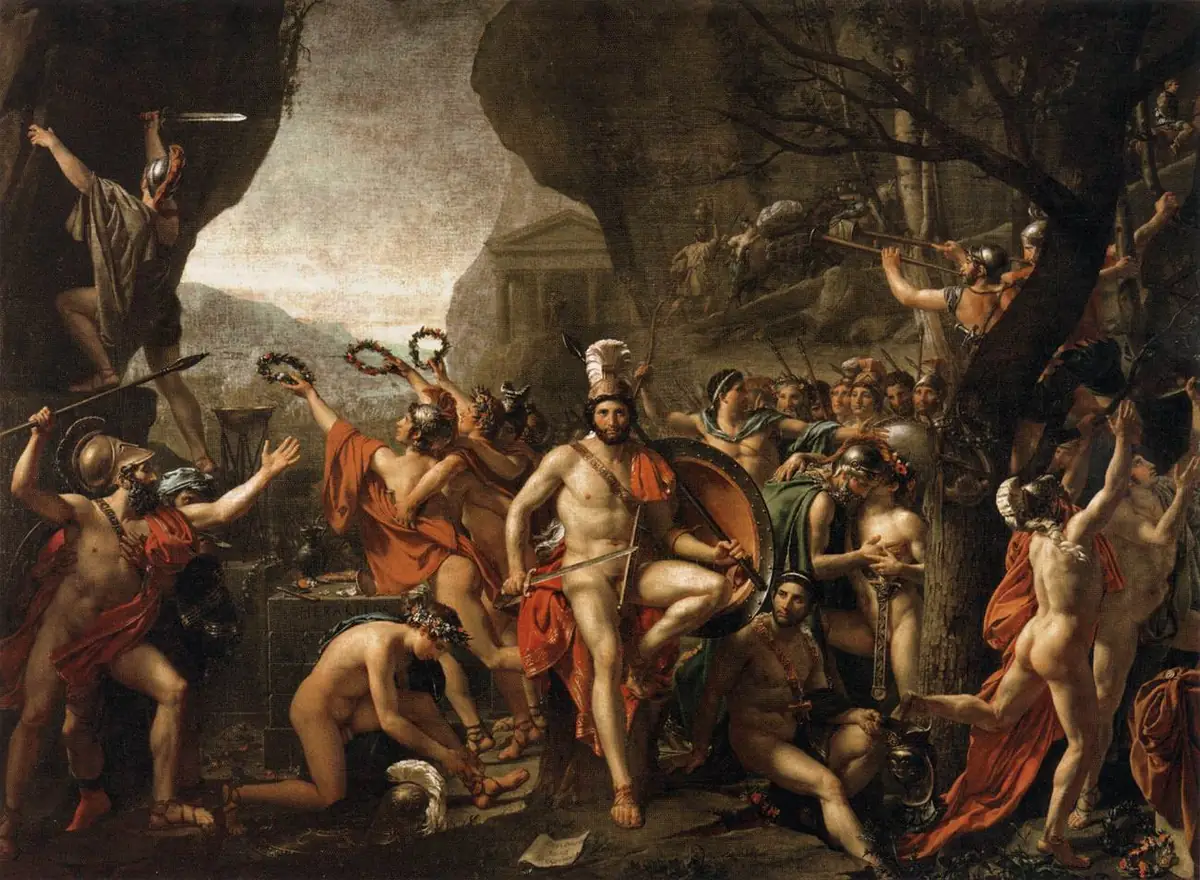
Come and Take Them
Come and take them.
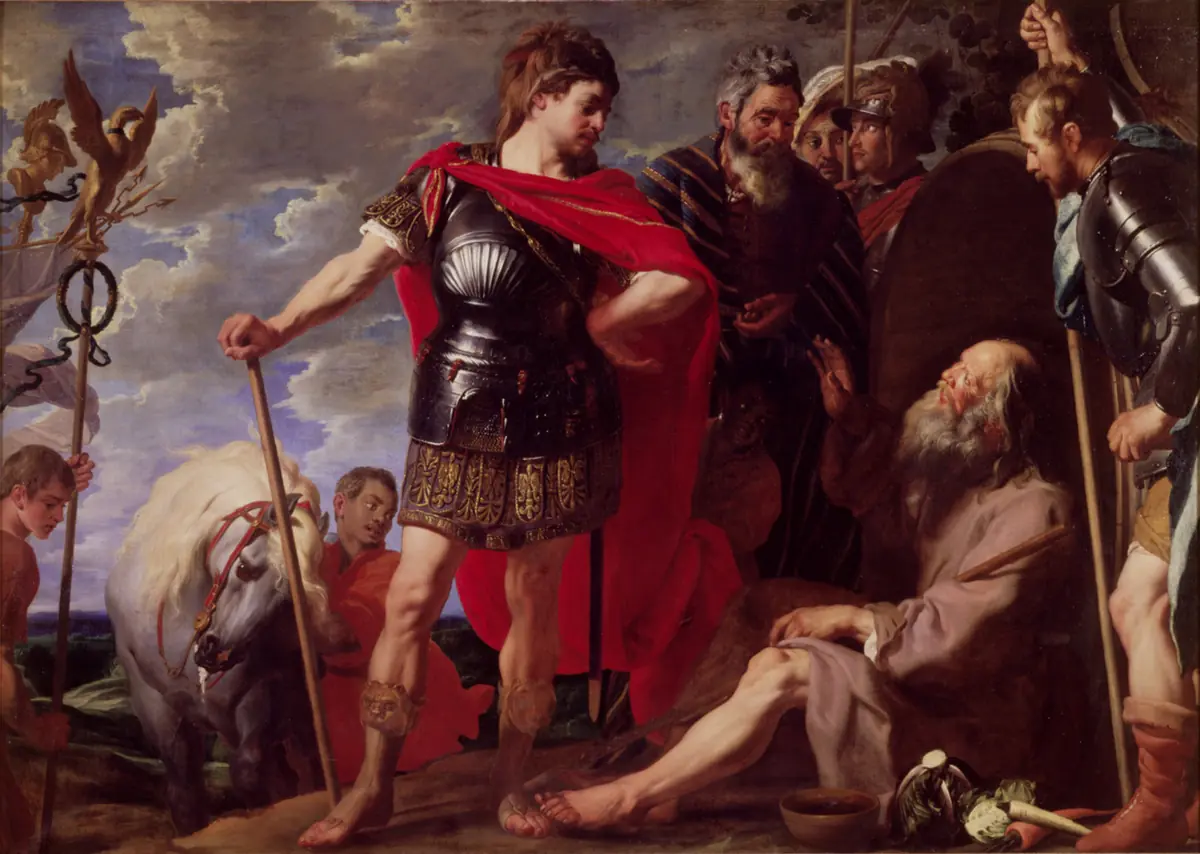
Stand Out of My Light
Stand out of my light.
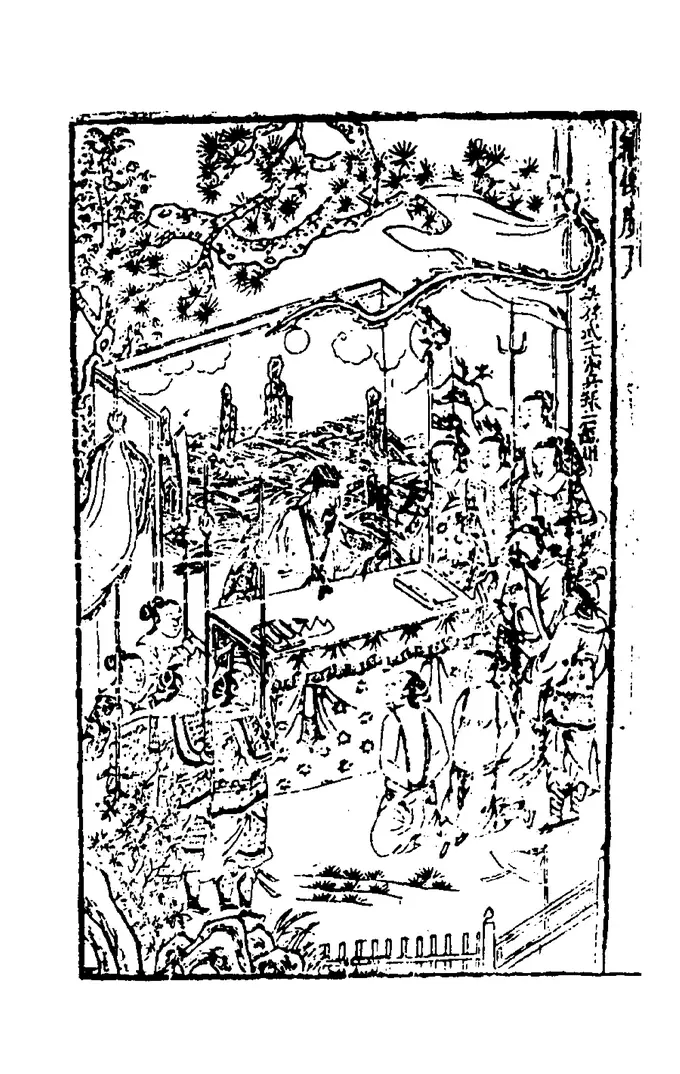
Supreme Excellence Is Not the Battle
Hence to fight and conquer in all your battles is not supreme excellence; supreme excellence consists in breaking the enemy's resistance without fighting.
The Die Is Cast
The die is cast.
An Enemy to Rome
Swear never to be the friend of the Romans.
A Cock to Asclepius
Crito, I owe a cock to Asclepius; will you remember to pay the debt?