Story
Come and Take Them
Come and take them.
A report, not a surviving dispatch. Plutarch, Sayings of Spartans, "Of Leonidas the Son of Anaxandridas," in the Goodwin revision of 1874. Xerxes writes "Send me thy arms," and Leonidas returns this answer. The Greek phrase later shortened to molon labe is Plutarch's classical Greek, centuries after 480 BCE. Herodotus, who is the near contemporary, does not record this exchange.
No post link has been added yet. When a cut is published, it will be listed here. The accounts are Instagram, X, YouTube, Pinterest.
The story
In 480 BCE a Persian army came down through Greece. Leonidas, one of the two kings of Sparta, held the narrow pass at Thermopylae with a small force. Herodotus, writing in the same century, tells the battle. He does not tell the story of a letter demanding the Spartan arms.
That story is in Plutarch’s Sayings of Spartans, a collection put together centuries later. In the 1874 Goodwin revision, Xerxes writes again, “Send me thy arms,” and Leonidas returns, “Come and take them.” The same chapter has him tell the men to dine as if they were to sup in another world. Treat both as sayings preserved under his name, not as a transcript of a dispatch.
The line people pair with him about fighting in the shade is a different problem. Plutarch’s collection gives it to Leonidas: someone says the Persian arrows will darken the sun, and he answers that it will be pleasant to fight in the shade. Herodotus 7.226 gives that speech to another Spartan, Dieneces. Godley’s 1920 translation has Dieneces call it good news. If the Medes hid the sun, they could fight in the shade instead of in the sun. Herodotus is the earlier witness, and he does not give the shade line to the king.
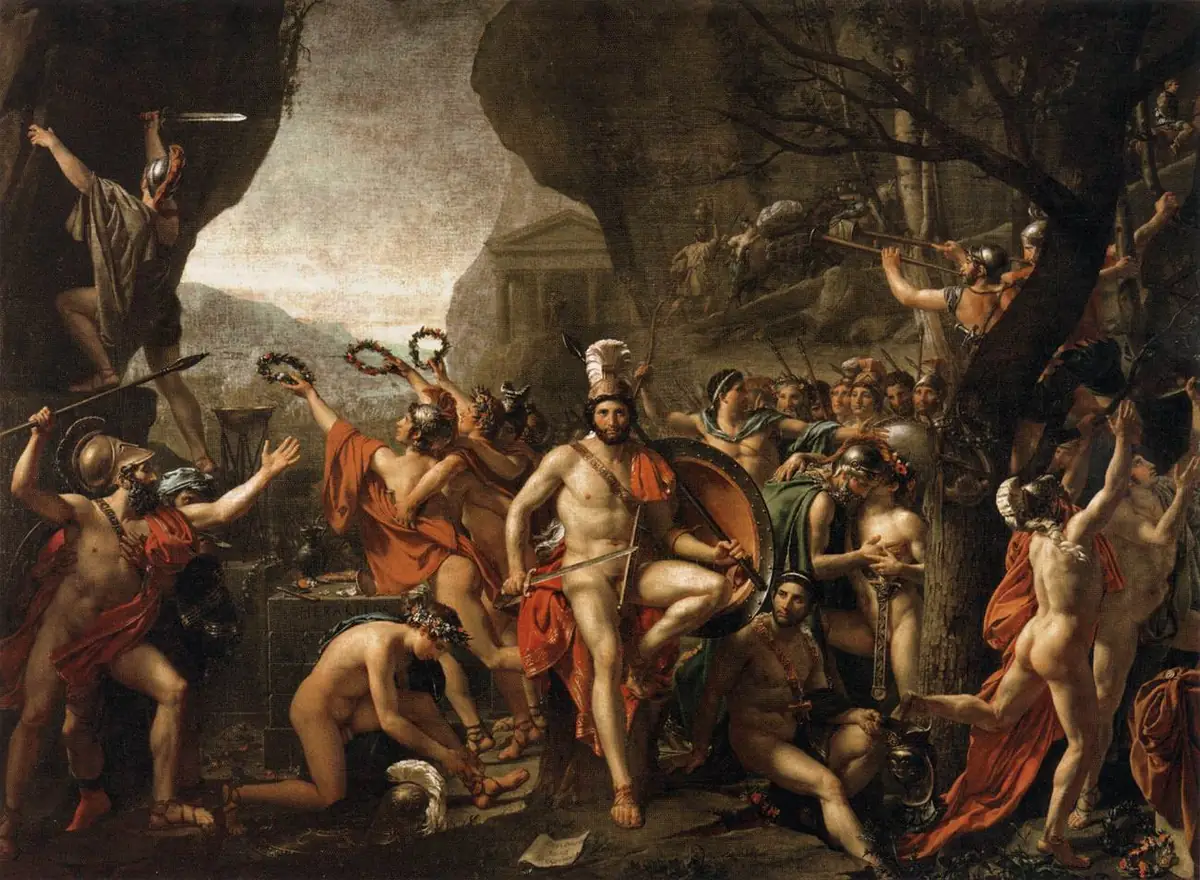
David’s Leonidas at Thermopylae (1814) paints the men in the pass, which is the battle Herodotus describes. The sentence on this page is the later reported answer to a demand for the weapons. The curiosity is the shade line sitting on the wrong man in the later collection, while the near-contemporary history pins it on Dieneces.
The artwork
Leonidas at Thermopylae · Jacques-Louis David, 1814
Jacques-Louis David finished Leonidas at Thermopylae in 1814. Spartan soldiers wait in a rocky pass. It is a nineteenth-century history painting of the battle, not an illustration of a letter, and not a portrait from 480 BCE.
Plutarch's anecdote is a written demand for the weapons and a two-word refusal. David's canvas is the army that stayed. The two meet in the same campaign and they are not the same moment.
Jacques-Louis David, Leonidas at Thermopylae, 1814. Oil on canvas. Public-domain painting; reproduction via Wikimedia Commons, from the Web Gallery of Art. Image file. Public domain. The painting is free of known copyright restrictions. A faithful reproduction of a two-dimensional public-domain artwork is treated as public domain in the United States; other countries may restrict reuse of the photograph.

Sources
- Plutarch, Apophthegmata Laconica, Of Leonidas the Son of Anaxandridas, Goodwin revisionPublic-domain English, 1874. Includes 'Come and take them' and the shade reply, which this collection gives to Leonidas.
- Herodotus, Histories 7.226, translated by A. D. GodleyPublic-domain Loeb translation, 1920. The shade saying is given to Dieneces, not to Leonidas.
- Wikimedia Commons file for David's painting
More like this
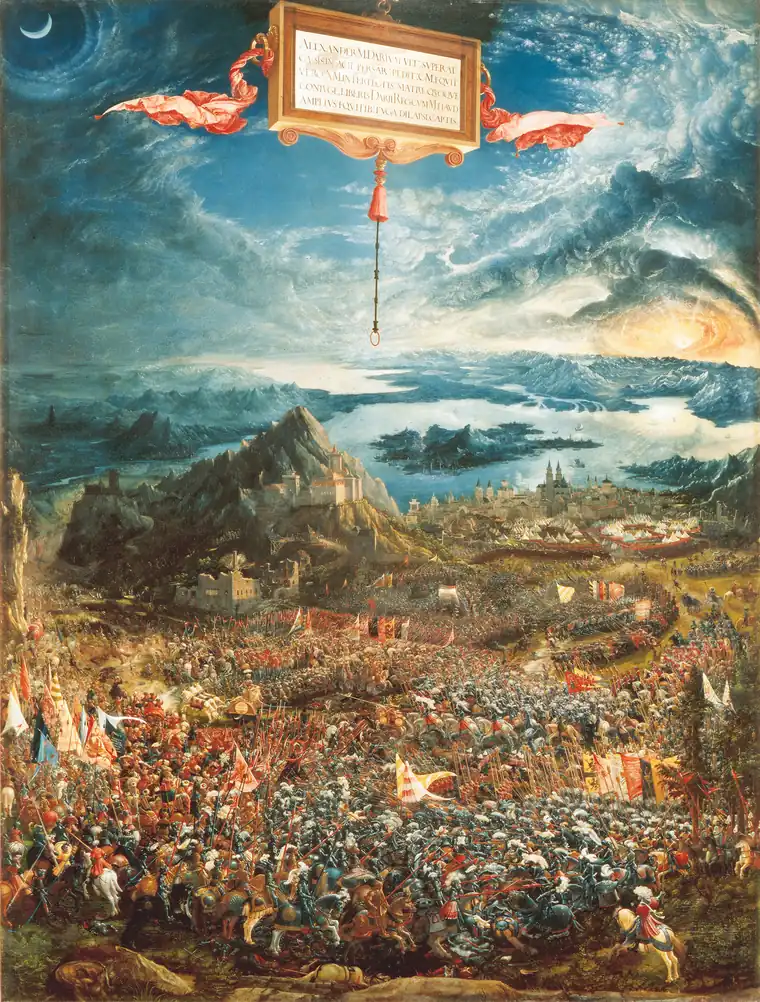
I Will Not Steal a Victory
I will not steal a victory.
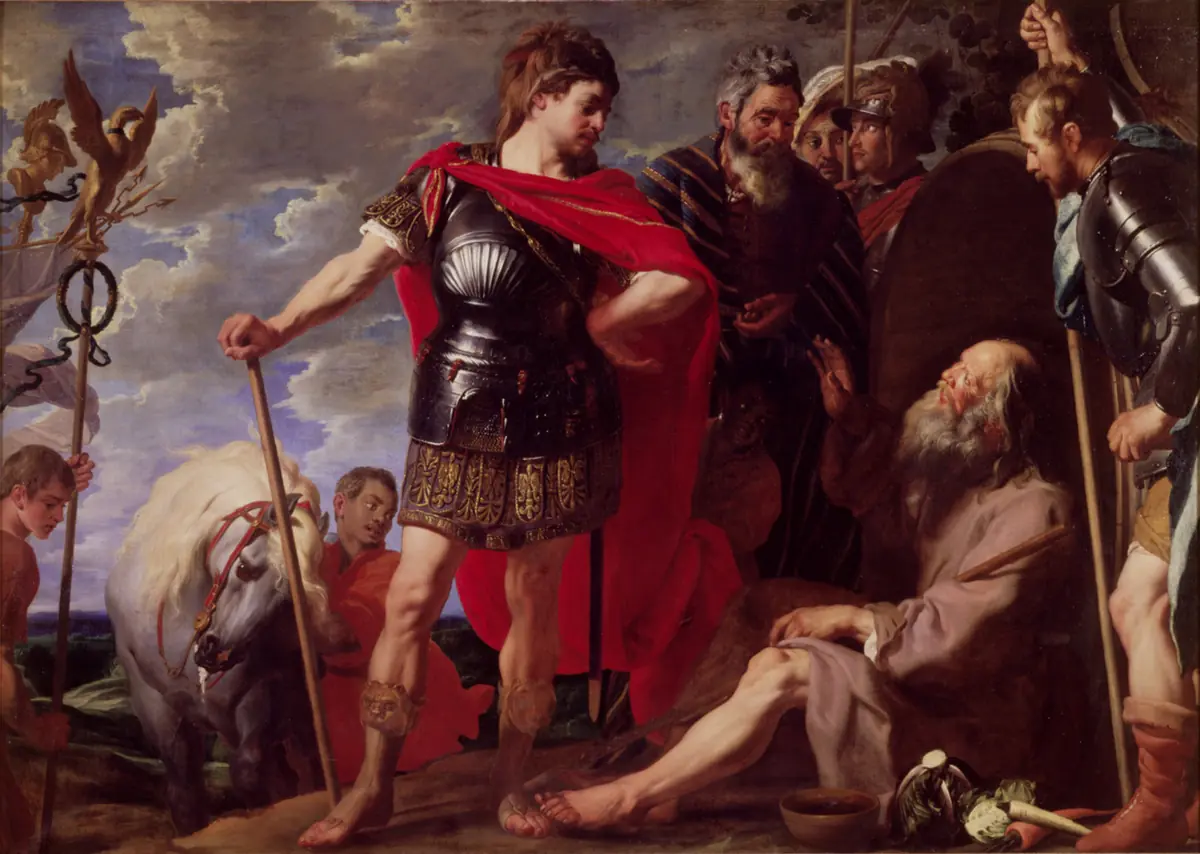
Stand Out of My Light
Stand out of my light.
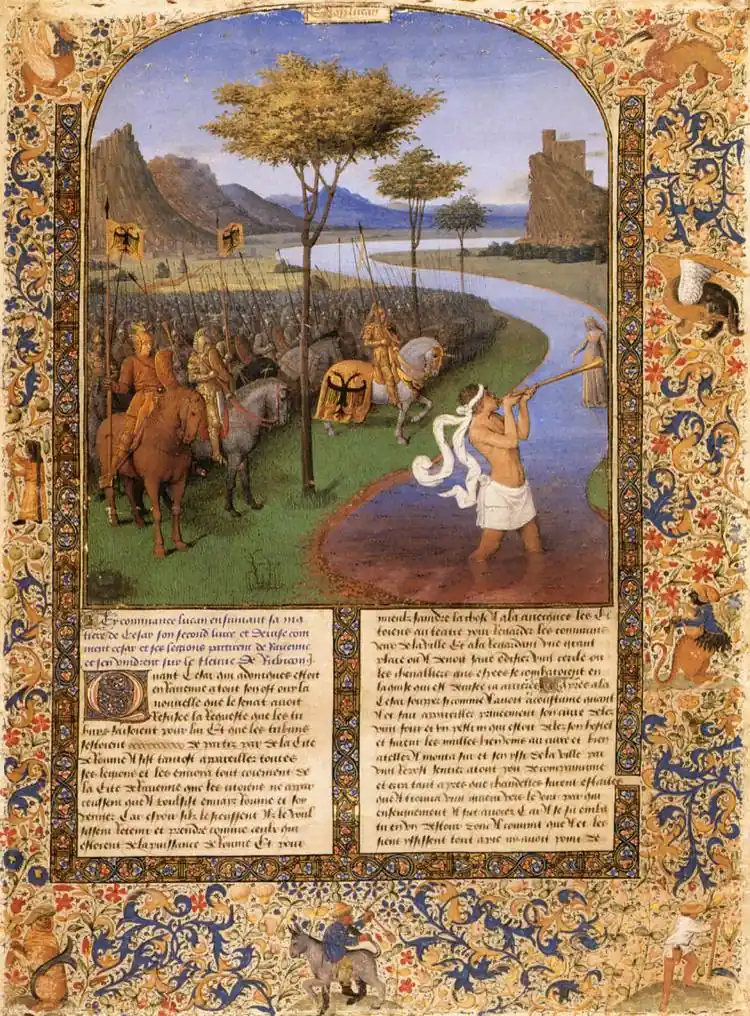
The Die Is Cast
The die is cast.
A Cock to Asclepius
Crito, I owe a cock to Asclepius; will you remember to pay the debt?
An Enemy to Rome
Swear never to be the friend of the Romans.
Now I Am My Own Master
Now I am my own master.