Story
A Cock to Asclepius
Crito, I owe a cock to Asclepius; will you remember to pay the debt?
Plato, Phaedo, in Benjamin Jowett's translation. Plato presents these as the last words. A cock to Asclepius is a thank-offering to the healing god. The reading that Socrates meant death itself was the cure is a later interpretation. It is not what the sentence says.
No post link has been added yet. When a cut is published, it will be listed here. The accounts are Instagram, X, YouTube, Pinterest.
The story
Athens had condemned Socrates, and then the city waited. Each year a sacred ship sailed to Delos, and while it was away the city put no one to death. Plato’s Phaedo is a friend’s report of the last day, after that ship had returned. Socrates spends it arguing that a philosopher should not fear the separation of soul and body. The people in the room include Crito, an old friend. Plato says he himself was ill and not there.
When the jailer brings the hemlock, Socrates asks what he is supposed to do, drinks it, and walks until his legs fail. Jowett’s translation has the man who gave the poison press the feet, then the legs, and show them growing cold and stiff. Socrates covers his face. He uncovers it once more. The last words, in that translation, are a request to Crito: he owes a cock to Asclepius, and Crito should remember to pay the debt. Crito says the debt shall be paid, and asks if there is anything else. There is no answer. In a minute or two the attendants uncover him. His eyes are set. Crito closes his eyes and mouth.
A cock to Asclepius was an ordinary thank-offering after a healing. People have read the sentence as if Socrates were calling death the cure. That is an interpretation added later. The Greek sentence, and Jowett’s English, name a debt and a god. They do not explain it.
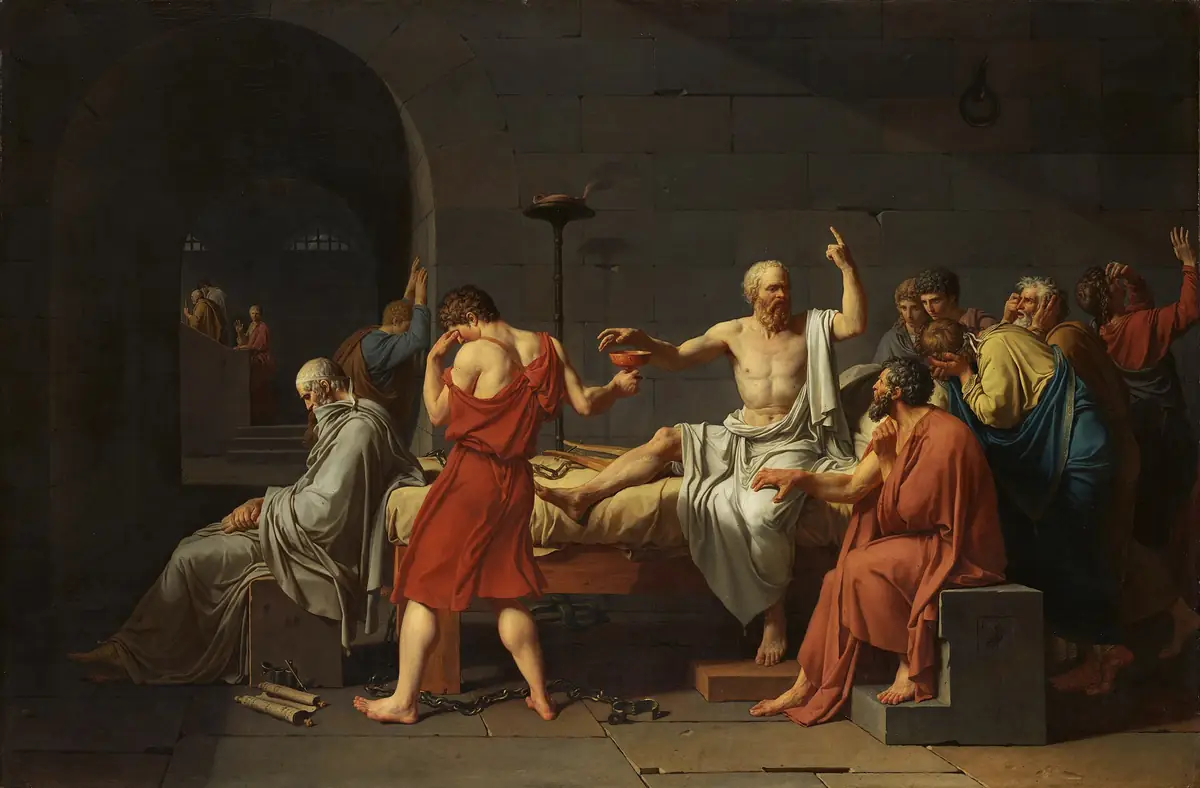
Epictetus uses this death as the example of something that did not look terrible to the person who underwent it. Cato, the night he died at Utica, spent the hours reading Plato’s dialogue on the soul, which is this one. David’s Death of Socrates (1787) paints the cup and the pointing hand. The last thing Plato has him say is not a doctrine. It is a bill, owed to the god of healing, and a friend is told not to forget it.
The artwork
The Death of Socrates · Jacques-Louis David, 1787
Jacques-Louis David painted The Death of Socrates in 1787. Socrates sits up on the bed, one hand raised, the other reaching toward the cup. Friends crowd the room. A seated older man is the figure usually identified as Plato. The dialogue says Plato was ill and not there, and in 399 he was not an old man. The canvas is a Neoclassical history painting of the last day, not a scene recorded by anyone who held a brush in that room.
The sentence on this page comes after the cup, when the body is already cold. David's picture stops at the gesture and the hemlock. It does not show the cock.
Jacques-Louis David, The Death of Socrates, 1787. Oil on canvas. The Metropolitan Museum of Art. Public-domain painting; reproduction via Wikimedia Commons. Image file. Public domain. The painting is free of known copyright restrictions. A faithful reproduction of a two-dimensional public-domain artwork is treated as public domain in the United States; other countries may restrict reuse of the photograph.

Sources
- Plato, Phaedo, translated by Benjamin JowettPublic-domain translation. The last words, the cold spreading upward, and Crito closing the eyes are at the end of the dialogue.
- Wikimedia Commons file for David's The Death of SocratesDated 1787. The Metropolitan Museum of Art is the collection named on the file.
More like this
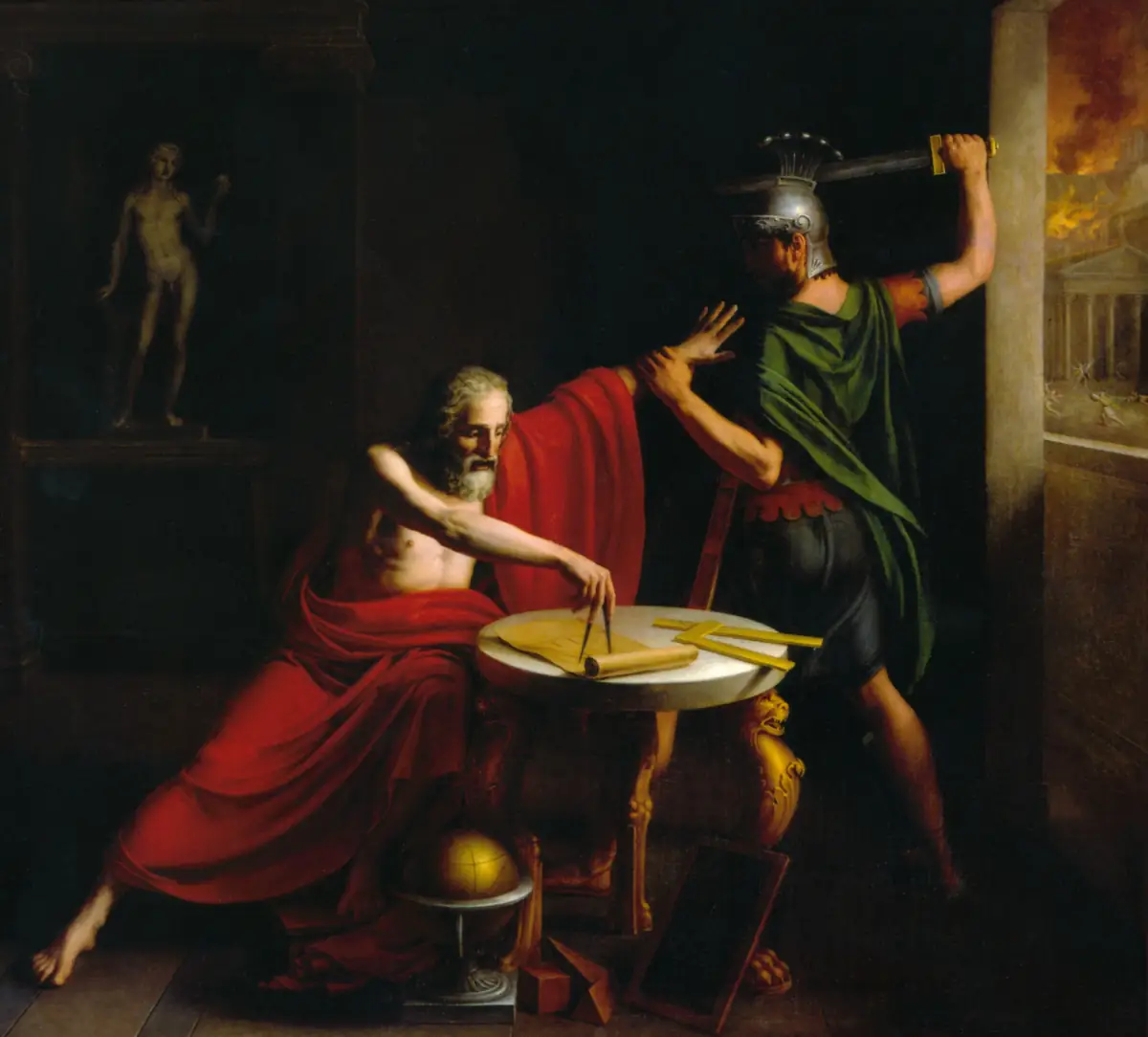
Do Not Disturb My Circles
Do not disturb my circles.
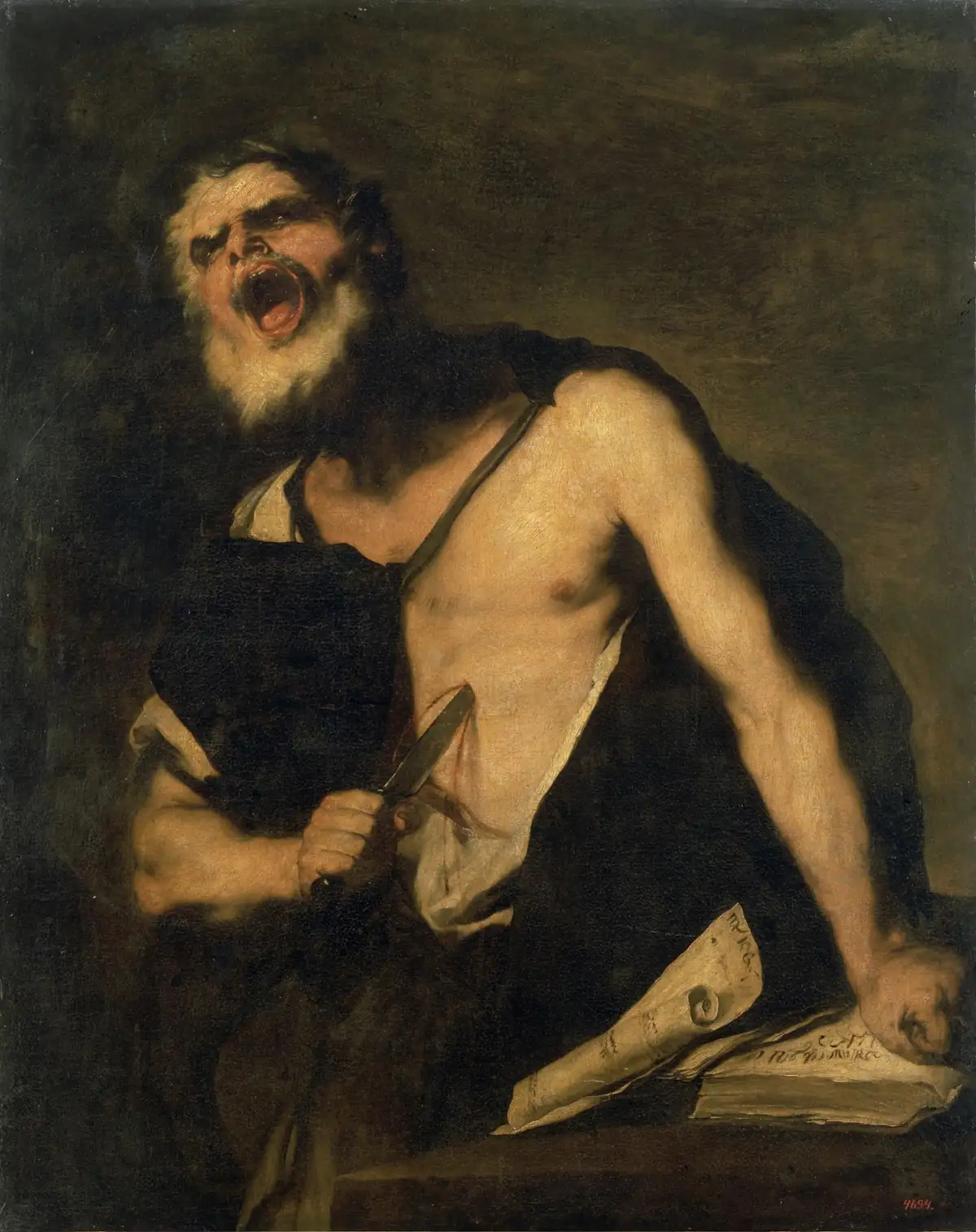
Now I Am My Own Master
Now I am my own master.
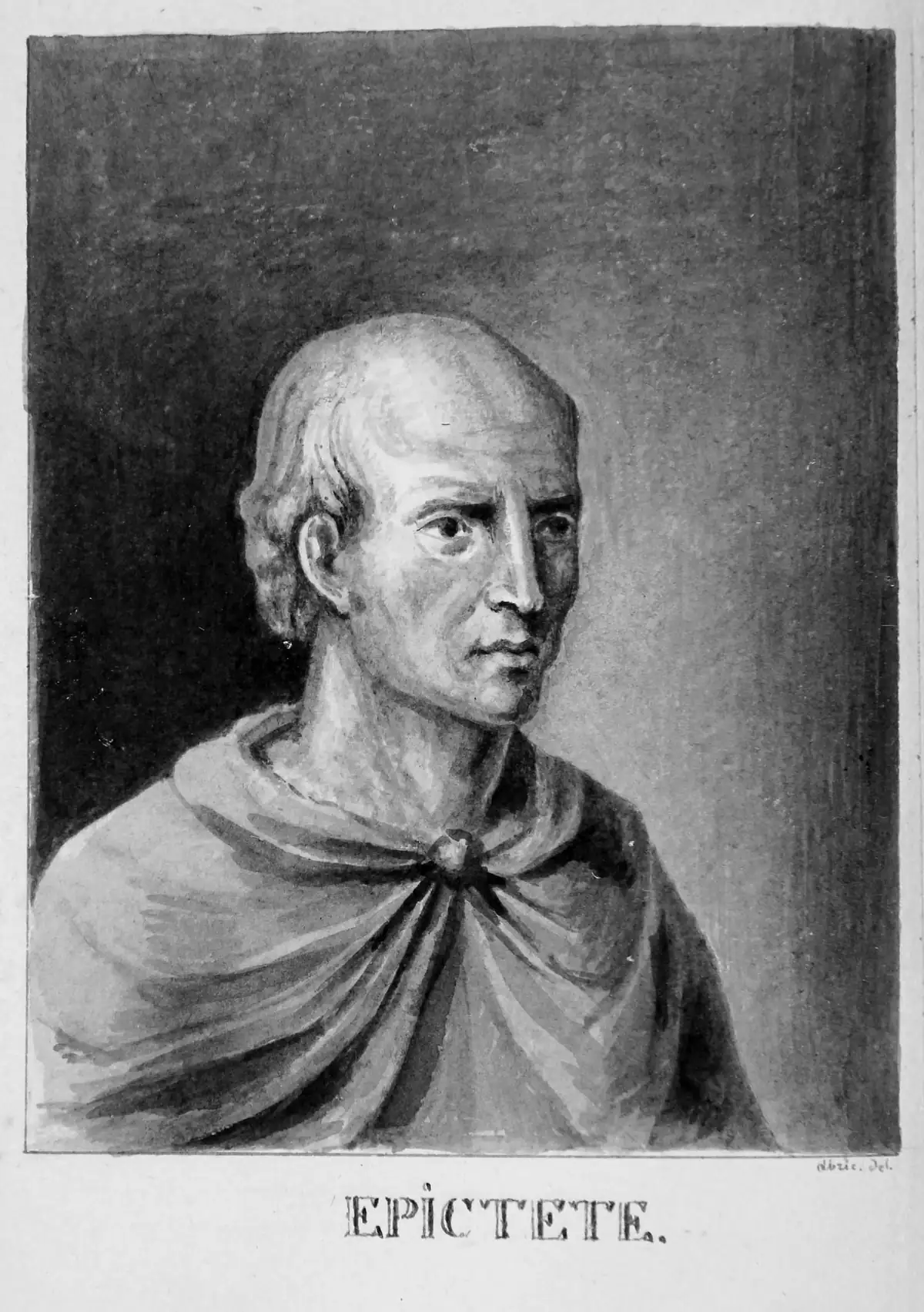
Men Are Disturbed Not by Things
Men are disturbed not by things, but by the views which they take of things.
Stand Out of My Light
Stand out of my light.
Come and Take Them
Come and take them.
I Will Not Steal a Victory
I will not steal a victory.