Person
Sun Tzu
The name tradition gives to the author of The Art of War. The life is uncertain, and no portrait from his time survives.
Life
Sun Tzu is the English name usually given to Sun Wu, the man Chinese tradition credits with The Art of War. “Tzu” is an honorific, closer to “Master Sun” than to a second family name. He is not a philosopher in the Greek sense, and this page does not turn him into one. The book attached to his name is a work on war and statecraft.
The traditional life comes from Sima Qian’s Records of the Grand Historian, written centuries after the sixth century BCE. In that account Sun Wu serves King Helü of Wu, demonstrates his discipline by training the palace women as soldiers, and has two of the king’s favorite concubines executed when they laugh at the drill. Lionel Giles retells the story in the introduction to his 1910 translation. It is tradition. It is not a confirmed biography, and the dates sometimes printed beside the name, about 544 to 496 BCE, should be read as traditional rather than documented.
The text is a separate question from the anecdote. Some readers keep a single author in Helü’s reign. Many historians treat the thirteen chapters we have as a book that took its shape later, during the Warring States period. Both settings fall under the Zhou dynasty. Citing a sentence from the book does not require settling that argument, as long as the life is labeled as uncertain.
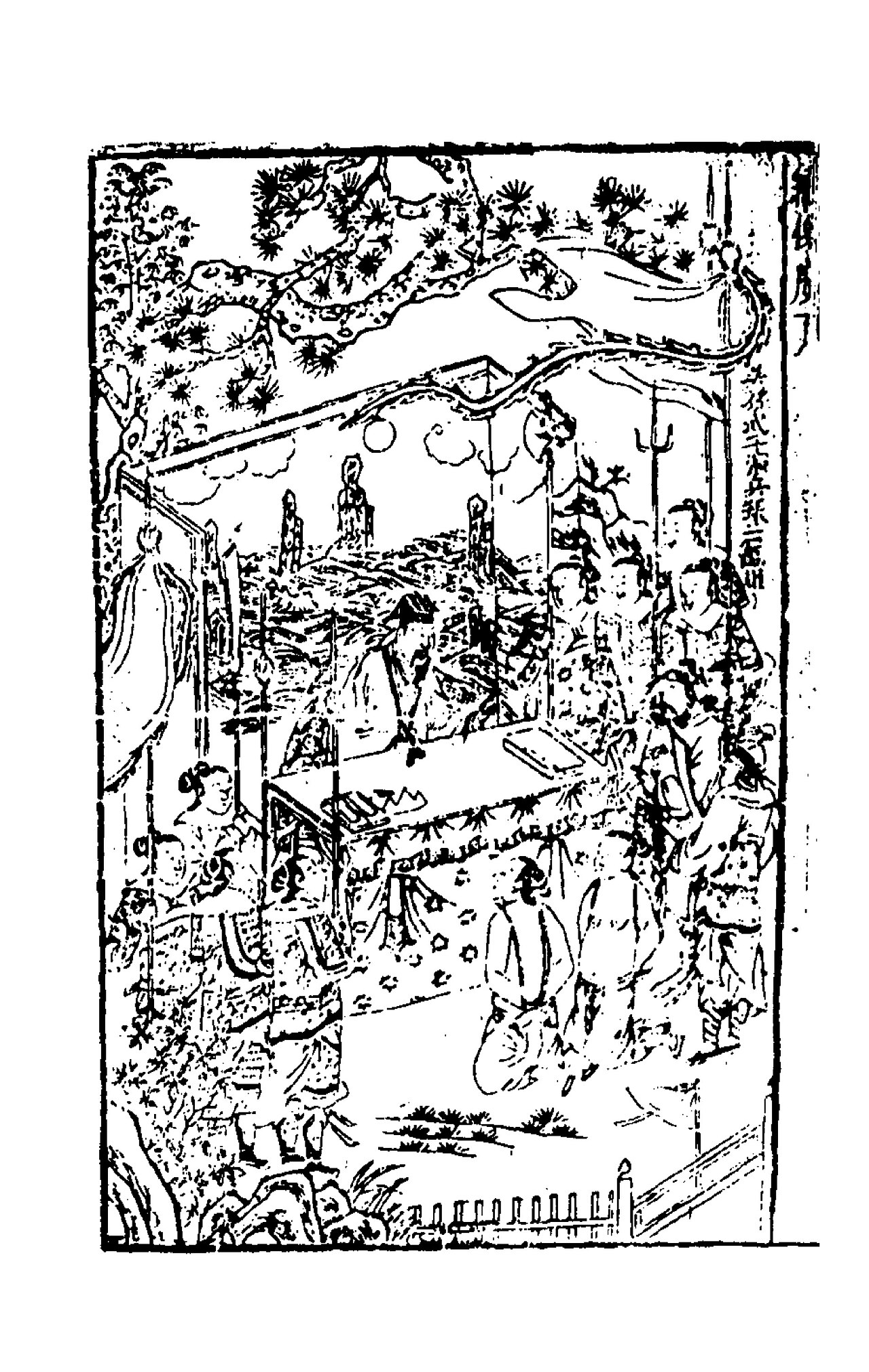
No image of him from his own century exists. The woodblock on this page was printed in 1643 for a collection of famous generals. It is a picture of his later reputation.
Unknown illustrator, woodblock portrait dated 1643 on the Wikimedia Commons file, from an illustrated book of famous generals. An imaginary later portrait, not a contemporary likeness. Public-domain image via Wikimedia Commons. Image file. Public domain, as marked on the Wikimedia Commons file.
