Person
Seneca the Younger
Stoic writer, senator, and Nero's tutor, author of the Moral Letters to Lucilius, ordered to die in 65 CE.
Life
Lucius Annaeus Seneca, called Seneca the Younger so he is not confused with his father, was born in Corduba, in Hispania Baetica. The year is uncertain. Reference works usually say about 4 BCE, and that figure should stay approximate. His father, Seneca the Elder, taught rhetoric. The son became a senator, a Stoic writer, and the author of tragedies, moral essays, and the Moral Letters to Lucilius.
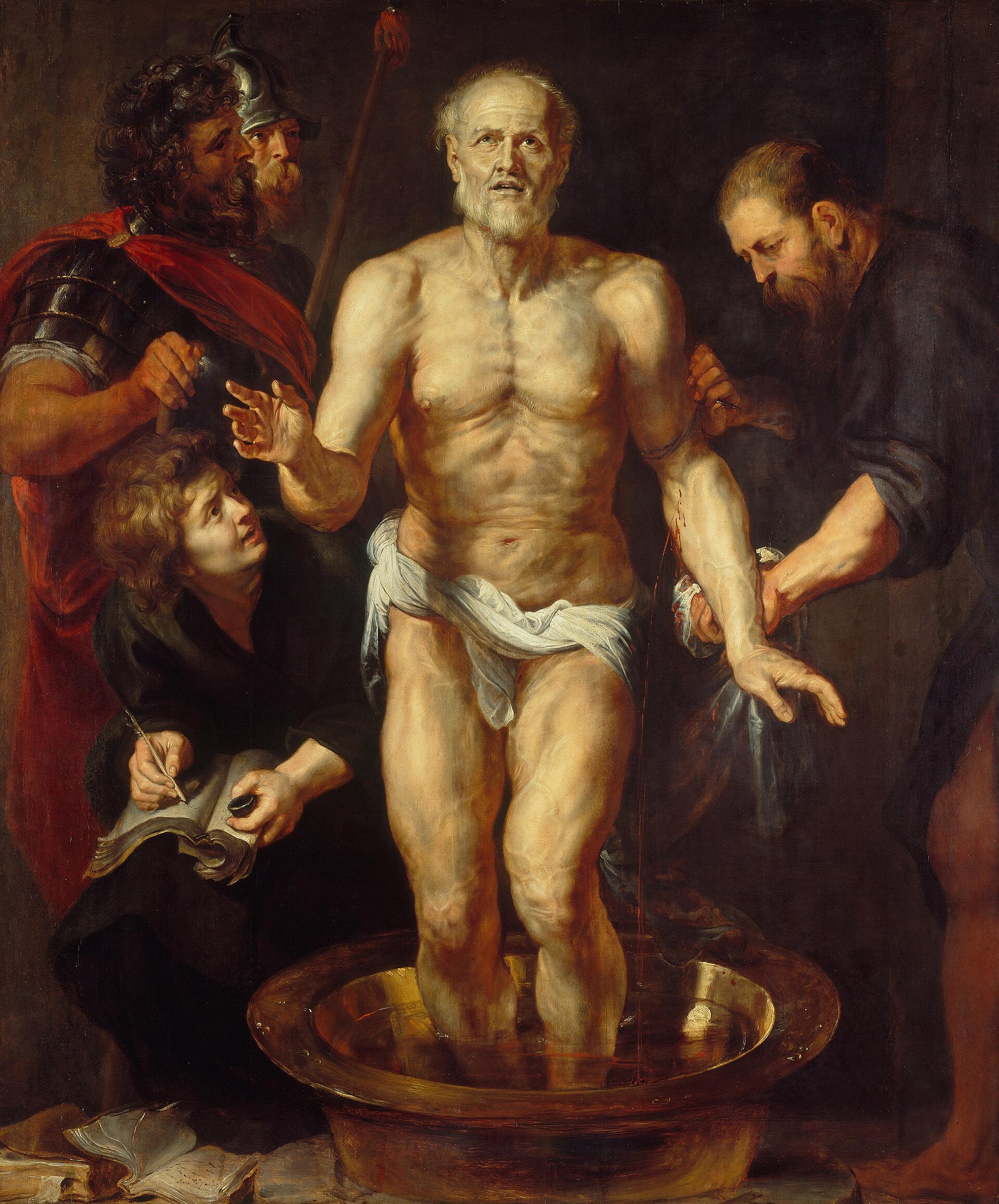
He was tutor and adviser to Nero. In 62 he tried to retire from court. In 65, after the conspiracy around Gaius Calpurnius Piso, Nero ordered him to die. Tacitus tells it in Annals 15. Seneca cut the veins in his arms. The blood moved slowly. He cut the veins in his legs as well, drank hemlock, and died in a hot bath, dictating as he went. His wife, Pompeia Paulina, opened her veins too and was bandaged up on Nero’s orders.
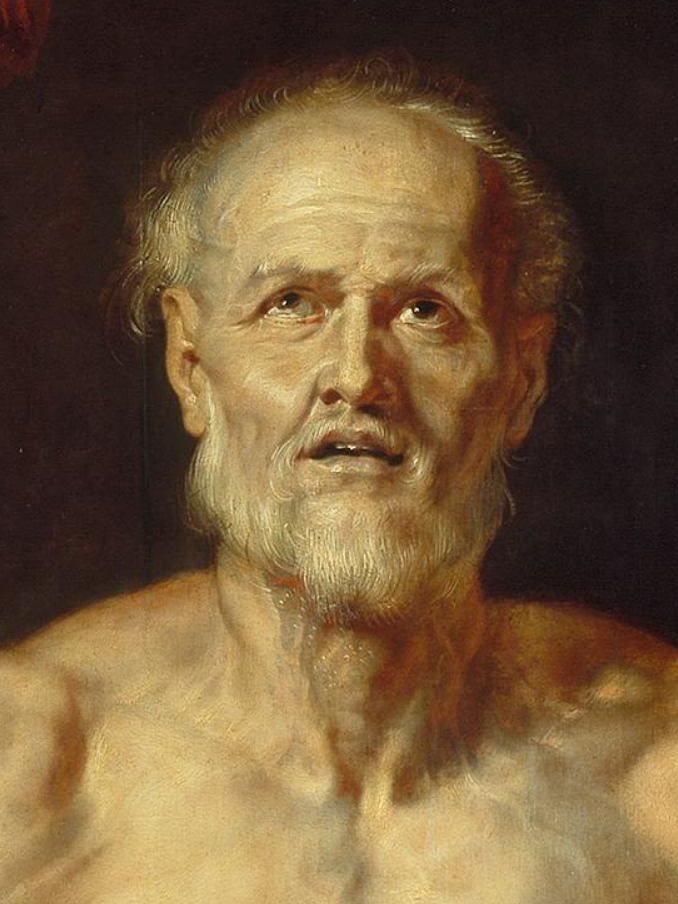
No portrait made in his lifetime can be identified with confidence. A Roman bust long exhibited as Seneca is now generally called the Pseudo-Seneca and is not relied on as his face. A double herm of Socrates and Seneca, found in 1813 and now in Berlin, is the ancient portrait type scholars usually prefer, and even that identification is an argument rather than a label carved in his lifetime. The picture here is a detail of Rubens’s Dying Seneca, painted around 1612, long before that herm was found.
Detail of Peter Paul Rubens, The Dying Seneca, about 1612–1613. Alte Pinakothek, Munich. A seventeenth-century imagining of the death, not a portrait from life. Public-domain reproduction via Wikimedia Commons. Image file. Public domain. See the Commons file for the reproduction status outside the United States.